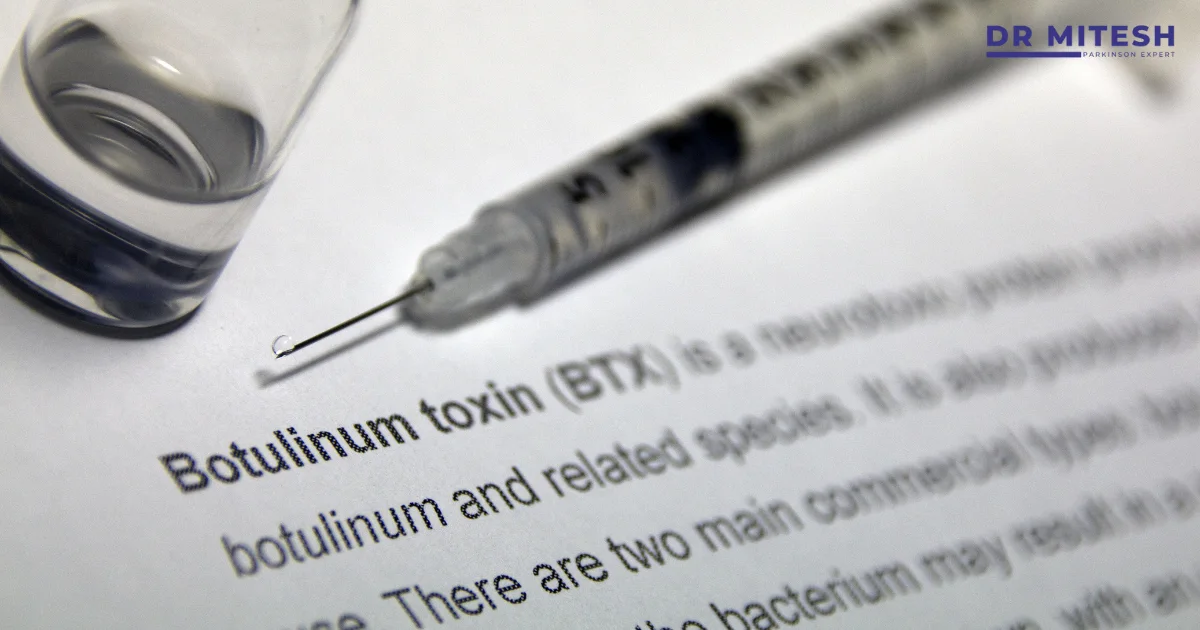
Botulinum toxin injections commonly known as Botox are widely used in neurology to treat muscle stiffness, abnormal movements, spasms, and certain pain conditions. Many patients notice clear improvement after injections, which naturally leads to an important question: Is Botulinum Toxin a permanent cure, or just a temporary treatment?
This blog explains the answer in simple, patient-friendly language. We’ll cover how Botox works, how long its effects last, whether repeated injections are safe, and what patients should realistically expect over time.
What Is Botulinum Toxin and Why Is It Used in Neurology?
Botulinum toxin is a purified medicine derived from bacteria. In medical doses, it is safe, controlled, and carefully targeted.
Doctors use it to relax overactive muscles and reduce abnormal nerve signals.
Common neurological conditions treated
- Dystonia (neck twisting, facial spasms, limb stiffness)
- Spasticity after stroke or brain injury
- Writer’s cramp and task-specific cramps
- Tremors and abnormal postures
- Certain pain-related muscle spasms
Important to understand:
Botulinum toxin treats symptoms, not the underlying disease causing them.
How Does Botulinum Toxin Work in the Body?
Botulinum toxin works at the nerve muscle junction, the point where nerves send signals to muscles.
What it does
- Blocks excessive nerve signals to specific muscles
- Allows tight or overactive muscles to relax
- Reduces pain, pulling, jerks, or abnormal postures
What it does NOT do
- It does not damage nerves permanently
- It does not cure the brain condition causing the problem
- It does not spread throughout the body when used correctly
This mechanism explains why Botulinum Toxin Treatment Duration is limited and not permanent.
Is Botulinum Toxin a Permanent Cure?
No. Botulinum toxin is not a permanent cure.
But that does not mean it is ineffective or unsafe.
Why it is not permanent
- Nerves slowly regenerate their connections
- Muscle activity gradually returns
- The underlying neurological condition usually remains
For most patients, Botox works as a long-term symptom management tool, not a one-time cure.
How Long Does Botulinum Toxin Last?
One of the most common questions is: How long does Botulinum Toxin last?
Typical duration
- Effects begin: 3-7 days
- Peak benefit: 4-6 weeks
- Gradual wearing off: 3-4 months
Factors that affect duration
- Condition being treated
- Muscle size and strength
- Dose used
- Accuracy of injection
- Individual body response
This is why many patients require repeat injections every 3-6 months.
Is Botox a Permanent Solution for Any Condition?
In most neurological conditions, Botox is not permanent. However, there are some situations where improvement becomes more stable over time.
When results may feel long-lasting
- Early treatment in mild dystonia
- Combined therapy with physiotherapy
- Retraining muscles after long-standing spasm
- Reduced abnormal movement habits
Even in these cases, the condition itself is usually managed, not cured.
Why Repeated Injections Are Often Needed
Many patients worry that repeated injections mean dependence or harm. This is a myth.
Why repeat treatment is normal
- The nerve-muscle connection naturally recovers
- Symptoms gradually return
- Regular treatment maintains quality of life
This is similar to how blood pressure medicines or Parkinson’s medicines work they control symptoms as long as they are used.
Are Repeated Botox Injections Safe?
A very common concern is about Repeated Botox injections safety.
What research and clinical experience show
- Botox has been used in neurology for over 30 years
- Long-term use is considered safe under medical supervision
- Serious side effects are rare when given by trained specialists
Possible mild side effects
- Temporary weakness in nearby muscles
- Mild pain or bruising at injection site
- Temporary fatigue in treated muscles
These effects usually resolve on their own.
Can the Body Stop Responding to Botox Over Time?
Some patients fear that Botox will “stop working.”
Reality
- True resistance is very rare
- Proper dosing and correct muscle selection reduce this risk
- Changing injection technique or toxin type can help if response reduces
This is why experience of the treating doctor matters greatly.
Botulinum Toxin vs Surgery: Which Is Better?
| Aspect | Botulinum Toxin | Surgery |
|---|---|---|
| Reversible | Yes | No |
| Risk level | Low | Higher |
| Hospital stay | Not needed | Required |
| Repeatable | Yes | No |
| First-line option | Yes | No |
For most movement disorders, Botox is preferred before considering surgery.
Who Is the Ideal Candidate for Botulinum Toxin?
Botox works best when:
- Symptoms are due to muscle overactivity
- Movements are focal or segmental
- Patient expectations are realistic
- Treatment is given by a trained specialist
It may not help if symptoms are due to severe nerve damage or advanced brain disease alone.
Does Botox Treat the Cause or Only the Symptoms?
This is a crucial point.
- Botox treats symptoms
- It does not reverse the underlying neurological condition
- It allows better movement, comfort, and daily function
Many patients live fuller, more active lives because symptoms are controlled even though the disease remains.
Living Long-Term With Botox Treatment
Many patients receive botulinum toxin injections for years.
Benefits over time
- Better posture and mobility
- Less pain and muscle fatigue
- Improved confidence and social life
- Reduced need for oral medicines
Botox becomes part of a long-term care plan, not a short-term fix.
Common Myths About Botulinum Toxin
❌ “It damages nerves permanently”
❌ “It spreads throughout the body”
❌ “Once started, you can never stop”
❌ “It cures the disease”
✅ Truth: Botox is a controlled, localized, reversible treatment.
Frequently Asked Questions (FAQs)
1. Is Botulinum Toxin a permanent cure for dystonia or spasticity?
No. It controls symptoms but does not permanently cure the condition.
2. How often do I need Botox injections?
Most patients need injections every 3-6 months, depending on response.
3. Is long-term Botox use harmful?
When given by an experienced doctor, long-term use is considered safe.
4. Can I stop Botox once symptoms improve?
Yes. Some patients space injections or stop temporarily under medical advice.
5. Does Botox affect the brain?
No. It works only at the muscle level and does not enter the brain.
Conclusion
Botulinum toxin is not a permanent cure, but it is one of the most reliable and safest treatments for managing many movement disorders. It offers symptom relief, improved mobility, and better quality of life when used correctly and consistently.
The success of treatment depends greatly on accurate diagnosis, proper injection technique, and expert clinical judgment. Consulting Botulinum Toxin Injection Specialist in Ahmedabad ensures that botulinum toxin is used appropriately as part of a comprehensive, long-term treatment strategy rather than a one-time solution.
With the right expectations and expert care, botulinum toxin remains a powerful tool that helps patients live better, more comfortable lives even if it is not a permanent cure.
Authoritative References
- PubMed Central – Botulinum Neurotoxin
- Science Direct – Botulinum Toxin Treatment Duration