
As a neurologist for Wilson’s disease, I help patients with early diagnosis and treatment to prevent serious liver and brain damage. If you or a family member has tremors, speech changes, or unusual behavior, especially at a young age, this page will help you understand how this genetic disorder works and how we treat it successfully.
Hello, I’m Dr. Mitesh Chandarana
I’m a neurologist and movement disorder specialist in Ahmedabad. One of the rare but completely treatable conditions I see is Wilson’s disease a genetic disorder that causes copper to build up in the body, affecting the brain, liver, and eyes.
With early diagnosis and proper treatment, many patients go on to live healthy lives.
What Is Wilson’s Disease?
Wilson’s disease is a genetic condition that stops the body from getting rid of extra copper. Normally, the liver removes extra copper through bile. But in Wilson’s disease, this process doesn’t work.
As a result, copper builds up in:
-
- The liver – causing damage or even liver failure
-
- The brain – causing tremors, stiffness, speech and movement problems
-
- The eyes – forming a ring called Kayser-Fleischer ring
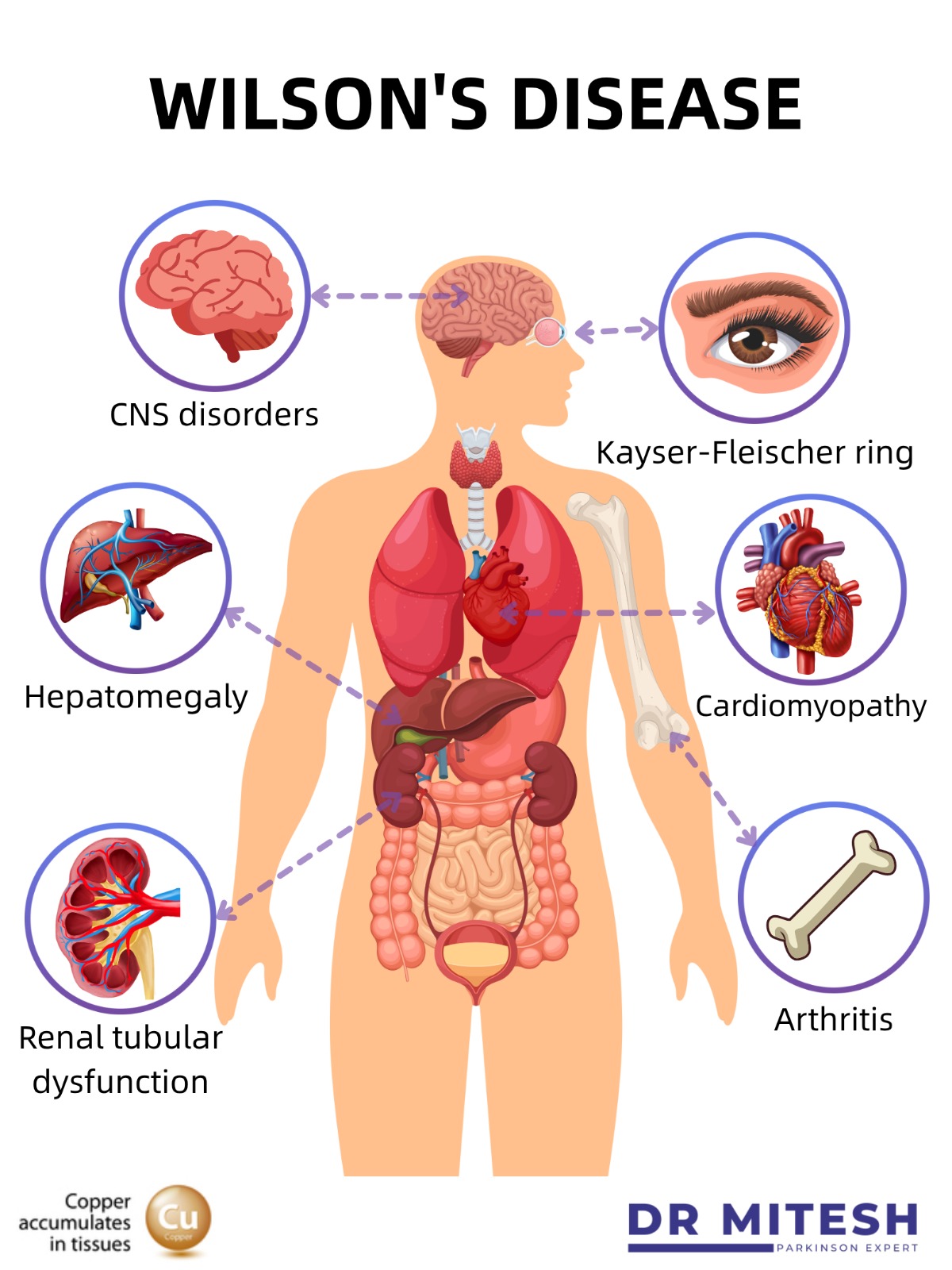 Diagram highlighting how copper buildup in Wilson’s Disease impacts multiple organs such as the brain, liver, eyes, kidneys, and heart.
Who Gets Wilson’s Disease?
Wilson’s is an inherited disease. If both parents carry the gene (even if they are healthy), the child has a 25% chance of getting the disease.
It usually shows up in children, teens, or young adults, but sometimes it is diagnosed later.
Symptoms I Look For
Brain (Neurological) Symptoms:
-
- Tremors or shaking
-
- Stiffness or abnormal postures (like dystonia)
-
- Trouble walking or using hands
-
- Slurred speech or difficulty swallowing
-
- Mood changes, forgetfulness, or confusion
Liver Symptoms:
-
- Fatigue, weakness
-
- Yellow skin (jaundice)
-
- Swelling of belly
-
- Abnormal liver tests or early liver failure (especially in children)
Eye Signs:
-
- Brownish ring in the cornea (Kayser-Fleischer ring)
-
- Found with an eye exam under slit-lamp
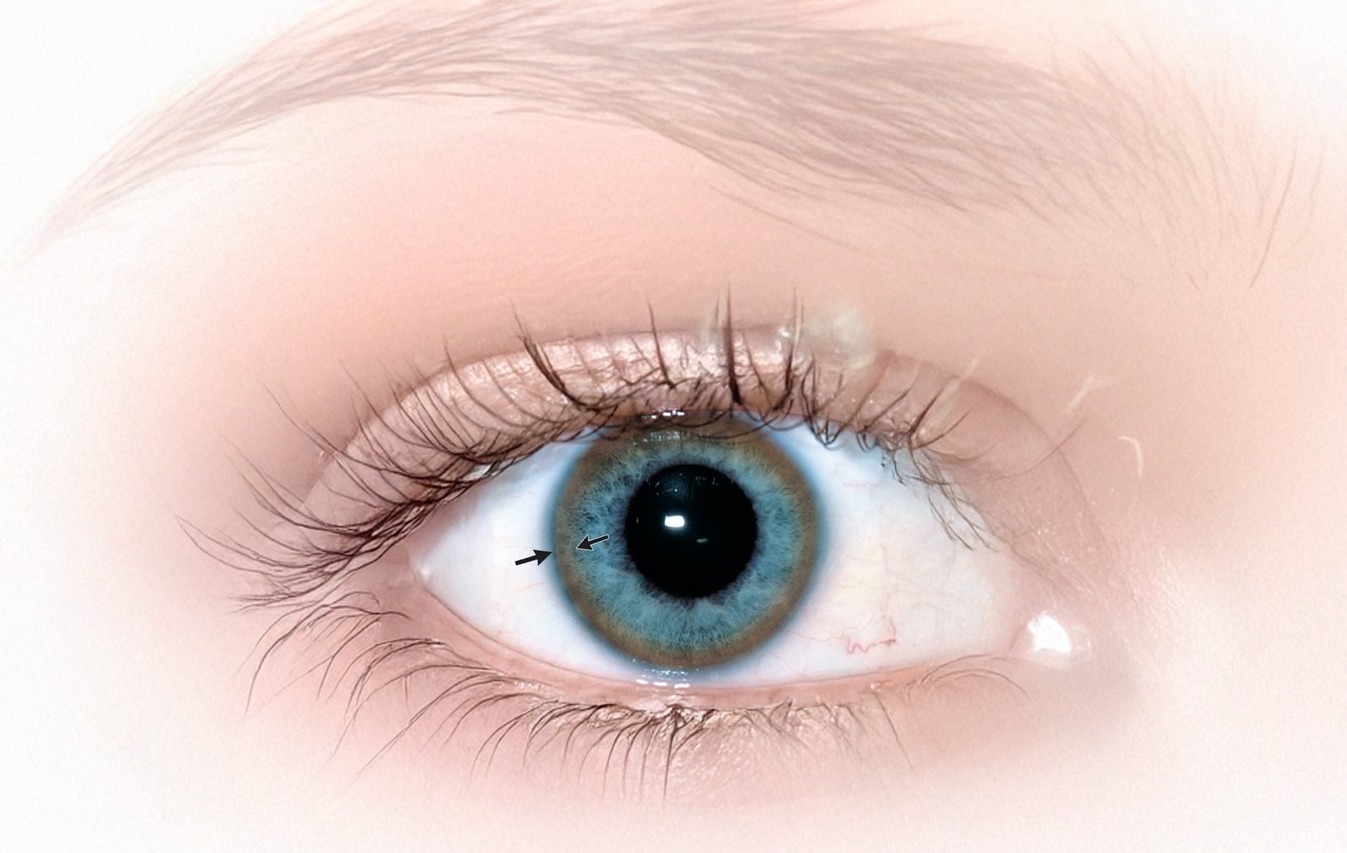 A close-up of an eye with a visible Kayser-Fleischer ring, indicating copper accumulation in Wilson’s Disease.
How I Diagnose Wilson’s Disease
If I suspect Wilson’s disease, I may suggest:
-
- Blood test for ceruloplasmin (a copper-carrying protein)
-
- 24-hour urine copper test
-
- Eye exam to look for the copper ring
-
- Liver function tests
-
- Brain MRI – may show signs of damage
-
- Genetic testing (if needed)
Diagnosis can be tricky but with the right tests and clinical experience, we can catch it early.
How I Treat Wilson’s Disease
Wilson’s is treatable if diagnosed early. The goal is to remove extra copper and stop further buildup.
1. Copper-Chelating Medicines
These medicines help remove copper from the body. Common ones I use include:
-
- D-penicillamine
-
- Trientine
-
- Zinc salts (block copper absorption from food)
Some medicines may cause temporary worsening of symptoms in the beginning. But they are life-saving in the long run.
2. Liver Transplant (in severe cases)
If the liver is badly damaged or failing, I refer patients for liver transplantation. After transplant, copper levels normalize and neurological symptoms may also improve.
3. Symptom Management
For tremors, dystonia, and posture problems, I also use:
-
- Botulinum Toxin (Botox) injections
-
- Speech and physiotherapy
-
- Other supportive medicines as needed
I monitor patients closely for side effects and adjust treatment over time.
Diet Advice for Wilson’s Patients
Copper is found in many foods. I advise avoiding:
-
- Chocolate
-
- Nuts
-
- Shellfish
-
- Liver and organ meats
I work with each patient to create a safe and balanced diet plan.
Should Family Members Be Tested?
Yes. Since this is a genetic condition, I recommend screening siblings of affected patients, even if they have no symptoms. Early treatment can prevent serious illness.
Parents are usually carriers, and may not have any symptoms.
My Goal: Early Diagnosis, Lifelong Support
I’ve seen young patients come in with tremors or behavior changes, wrongly treated for other issues. But once diagnosed with Wilson’s and started on the right treatment, they improved dramatically.
That’s why I take every young movement disorder case seriously and test for Wilson’s when needed.
Frequently Asked Questions (FAQs)
Q1. Is Wilson’s disease curable?
It’s not curable, but fully treatable. If caught early and managed well, you can live a long and healthy life. Know More
Q2. Can I stop medicines after I feel better?
No. Stopping treatment can lead to serious relapse. Continue as advised. Know More
Q3. Is this disease common?
No. It’s rare, but important to catch because it is treatable if found early. Know More
Q4. Can I marry and have children?
Yes. But genetic counseling is advised to understand the risks and take precautions. Know More
Q5. How often should I follow up?
I see patients every 3-6 months, depending on stability, to monitor copper levels and adjust treatment. Know More
Don’t Let Wilson’s Go Undiagnosed
If you or your child has tremors, stiffness, liver problems, or behavior changes, especially at a young age, don’t wait. Wilson’s disease is treatable, and I’m here to help you catch it early and treat it right.
Book Your Appointment Today
 Call: 8866843843
 Medisquare Superspeciality Hospital, Ahmedabad