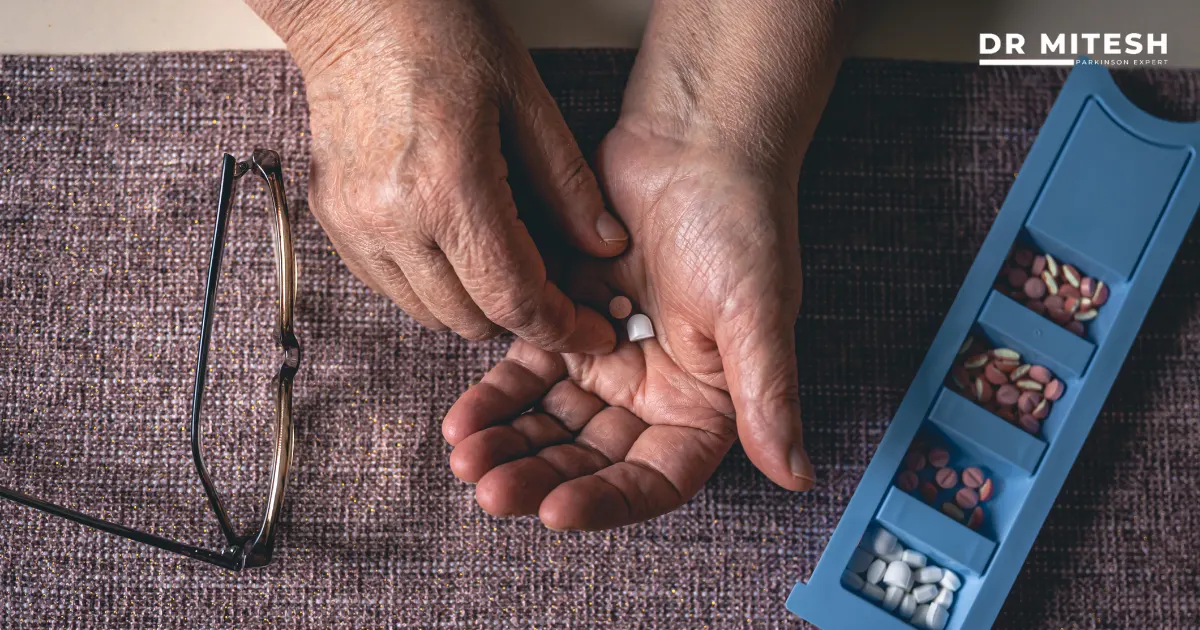
Parkinson’s disease is a long-term neurological condition, and for most patients, medicines remain the backbone of treatment. As the disease progresses, however, many people experience fluctuating benefits from tablets good control at one time of the day and troublesome symptoms at another. At this stage, Deep Brain Stimulation (DBS) is often discussed.
A very common and practical question patients ask is: “Can I stop my Parkinson’s medicines after DBS?”
This blog answers that question clearly, honestly, and in patient-friendly language so you can make an informed decision.
Understanding Parkinson’s Medicines First
Before we talk about DBS, it is important to understand why medicines are used in Parkinson’s disease.
Parkinson’s happens because the brain slowly loses dopamine, a chemical that helps control smooth movement.
What Parkinson’s medicines do
- Help replace or mimic dopamine
- Improve:
- Slowness of movement
- Stiffness
- Tremors
- Walking difficulties
- Reduce non-motor symptoms like:
- Pain
- Anxiety
- Sleep problems (in some patients)
Common challenges with long-term medicines
Over time, many patients notice:
- Wearing-off (medicine works for shorter durations)
- Unpredictable ON-OFF periods
- Involuntary movements (dyskinesia)
- Need for frequent dose increases
This is usually when DBS enters the conversation.
What Is Deep Brain Stimulation (DBS)?
DBS is a surgical treatment used in selected patients with Parkinson’s disease.
In simple terms
- Thin electrodes are placed in specific brain areas that control movement
- These electrodes deliver controlled electrical signals
- The signals help normalize abnormal brain activity
DBS does not cure Parkinson’s, but it can significantly improve symptom control when medicines alone are no longer enough.
Does DBS Replace Parkinson’s Medicines Completely?
Short answer: No
DBS does not completely replace Parkinson’s medicines in most patients.
The more accurate answer
- DBS reduces the need for medicines
- It allows:
- Lower doses
- Fewer tablets
- More stable symptom control
- Most patients still need some medication, even after successful DBS
Think of DBS as a strong partner to medicines not a total substitute.
Learn More About Is DBS a Cure for Parkinson’s?
Why Medicines Are Still Needed After DBS
Even after DBS surgery, Parkinson’s remains a progressive condition.
Reasons medicines are continued
- DBS improves motor symptoms, but:
- Does not fully replace dopamine
- Some symptoms respond better to medicines than stimulation
- Non-motor symptoms often still require tablets
- Disease progression continues slowly over time
What changes after DBS
- Dose of medicines often reduces significantly
- Timing becomes more predictable
- Side effects like dyskinesia may reduce
How Much Can Parkinson’s Medicines Be Reduced After DBS?
This varies from person to person.
Typical medication changes after DBS
- 30-60% reduction in total daily medication is common
- Some patients reduce even more
- Very few patients stop medicines completely
Factors that influence reduction
- Age of the patient
- Duration of Parkinson’s disease
- Type of symptoms (tremor-dominant vs stiffness/slowness)
- Brain target used for DBS
- Overall brain health
Levodopa Dose After DBS: What Patients Experience
Levodopa remains the most effective medicine for Parkinson’s.
After DBS:
- Lower doses are usually needed
- Duration of benefit becomes more stable
- Sudden OFF periods reduce
- Dyskinesia often improves due to dose reduction
However:
- Levodopa is not stopped abruptly
- Adjustments are gradual and supervised
Medicines After DBS Surgery: What Stays and What Changes
Common changes seen
- Fewer daily doses
- Lower strength tablets
- Less need for rescue medications
Medicines that may still be required
- Levodopa-based drugs
- Medicines for sleep or anxiety
- Blood pressure medications (for autonomic symptoms)
- Treatment for mood or pain, if needed
What DBS Can Do Better Than Medicines
DBS is especially helpful for:
- Severe tremors not controlled by tablets
- Fluctuations between ON and OFF states
- Medication-induced involuntary movements
- Improving overall quality of life
Benefits patients often report
- More predictable days
- Better mobility
- Improved independence
- Less frustration with timing medicines
What DBS Cannot Replace
It is important to have realistic expectations.
DBS does not:
- Stop disease progression
- Replace medicines entirely in most cases
- Improve all non-motor symptoms
- Work equally well for every patient
That is why proper patient selection is crucial.
Who Is the Right Candidate for DBS?
DBS is not for everyone with Parkinson’s.
Ideal candidates usually:
- Respond well to Levodopa but have fluctuations
- Have troublesome dyskinesia
- Do not have severe memory problems
- Are medically fit for surgery
- Have realistic expectations
A detailed evaluation by a movement disorder specialist is essential.
DBS and Parkinson’s Treatment After Surgery: A Team Approach
After DBS:
- Programming sessions are required
- Medicines are adjusted slowly
- Follow-up is lifelong
DBS works best when:
- Surgery is done correctly
- Programming is optimized
- Medicines are tailored individually
This combined approach leads to the best long-term outcomes.
Common Myths About DBS and Medicines
Myth 1: “DBS means no more tablets”
➡️ False – Most patients still need medicines, but less.
Myth 2: “DBS works immediately”
➡️ False – Benefits improve gradually with programming.
Myth 3: “DBS stops Parkinson’s”
➡️ False – It manages symptoms, not the disease itself.
A Simple Comparison Table
| Aspect | Medicines Alone | DBS + Medicines |
|---|---|---|
| Symptom control | Variable | More stable |
| Tablet burden | High | Reduced |
| Dyskinesia | Common | Often reduced |
| Disease cure | No | No |
| Quality of life | May decline over time | Often improves |
FAQs: Does DBS Replace Parkinson’s Medicines?
1. Can I completely stop Parkinson’s medicines after DBS?
In most cases, no. Medicines are reduced but usually not stopped entirely.
2. How soon are medicines reduced after DBS surgery?
Dose reduction happens gradually over weeks to months, under medical supervision.
3. Is DBS better than medicines?
DBS is not better or worse, it is an add-on therapy when medicines alone are insufficient.
4. Will DBS help if medicines no longer work at all?
DBS works best in patients who still respond to Levodopa. If medicines never help, DBS may not be effective.
5. Can DBS reduce side effects of Parkinson’s medicines?
Yes. By lowering doses, DBS often reduces dyskinesia and fluctuations.
Conclusion
DBS does not replace Parkinson’s medicines, but it can dramatically reduce dependency on them and improve day-to-day stability. For the right patient, it transforms unpredictable, medication-driven days into more controlled and independent living.
The key lies in proper evaluation, realistic expectations, and expert long-term care. When DBS is planned and managed by Parkinson’s Specialist, patients receive not just a surgical procedure, but a comprehensive treatment strategy focused on long-term quality of life.
If you or your family are considering DBS, understanding its role alongside Parkinson’s medicines is the first step toward confident decision-making.
Authoritative References
- Neuro Modulation Health Care – Parkinson’s Medication after DBS