When medicines no longer control the symptoms of Parkinson’s disease, dystonia, or severe tremors life can become increasingly difficult. Simple tasks like eating, writing, or walking become frustrating challenges. For many patients in this situation, Deep Brain Stimulation (DBS) can be a life-changing option.
But what exactly is DBS? How does it work inside the brain? And most importantly is it right for you?
I’m Dr. Mitesh Chandarana, a Movement Disorders and Parkinson’s specialist in Ahmedabad. In this blog, I’ll answer these questions so you can make an informed decision with confidence.
What Exactly Is Deep Brain Stimulation?
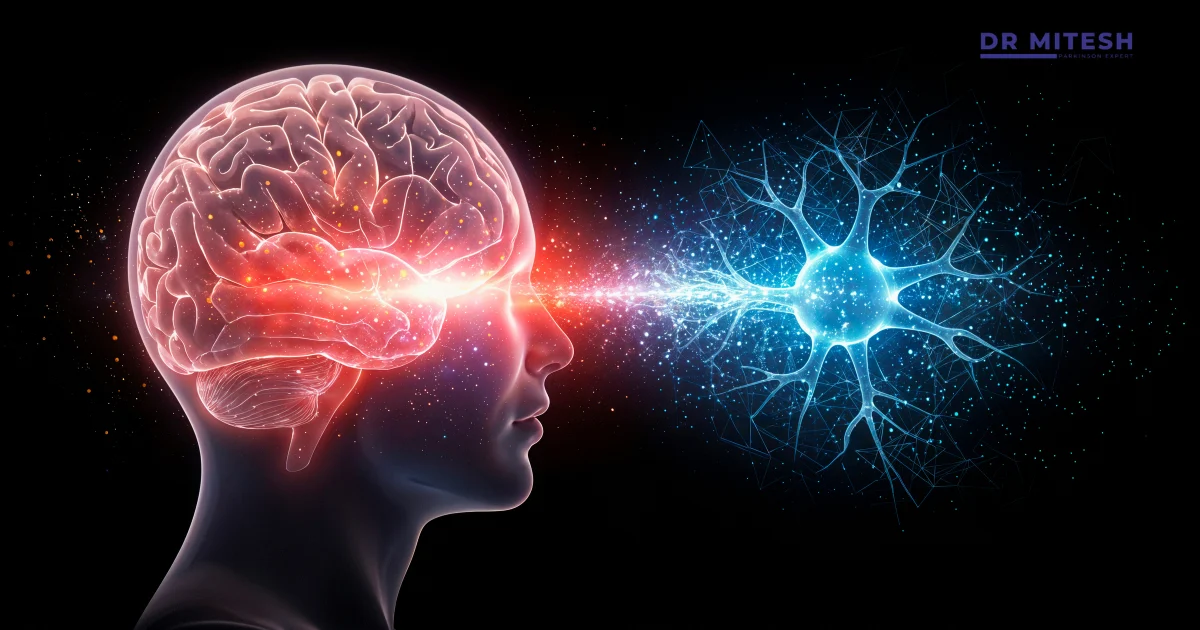
Think of DBS as a pacemaker but for your brain. Just like a heart pacemaker uses gentle electrical pulses to regulate heartbeat, a DBS device sends precisely controlled electrical signals to specific areas of the brain to correct abnormal activity that causes tremors, stiffness, and uncontrolled movements.
The DBS system has three main components:
- Electrodes (thin wires) placed in specific brain regions
- Extension wires connecting the electrodes to the battery
- IPG (Implanted Pulse Generator) the battery/pacemaker, placed under the skin near the chest
Unlike brain surgeries that destroy tissue, DBS is reversible and adjustable. If needed, the settings can be changed, and the device can even be turned off.
Who Can Benefit from DBS?
DBS is not for everyone. As a DBS specialist, I carefully evaluate each patient before recommending surgery. Here are the main groups of patients who can benefit:
1. Parkinson’s Disease Patients
DBS is most commonly used for Parkinson’s disease. It may be right for you if:
- Your medicines worked well initially but are now wearing off too quickly
- You experience dyskinesia – the uncontrolled, dance-like movements caused by long-term levodopa use
- You need very high doses of medicine to get relief
- Your symptoms are significantly affecting your daily quality of life
2. Essential Tremor
If you have hand tremors so severe that you cannot eat, write, or work and medicines have not helped – DBS targeting the thalamus can offer remarkable relief and restore independence.
3. Dystonia
For patients with generalized or segmental dystonia, a condition that causes involuntary muscle contractions and painful abnormal postures. DBS can gradually reduce muscle twisting and significantly improve quality of life. Results with dystonia take longer to appear than with Parkinson’s, but many patients see meaningful improvements over weeks to months.
4. Tourette Syndrome (Selected Cases)
In carefully selected patients with severe motor or vocal tics that have not responded to medication or behavioural therapies, DBS can be considered as a last-resort treatment.
Who Should NOT Get DBS?
Equally important is knowing when DBS is not suitable. I do not recommend DBS for patients who:
- Have significant memory loss or dementia
- Suffer from uncontrolled depression or active psychosis
- Have Parkinson’s disease that does not respond to levodopa
- Are not medically fit for surgery due to other serious health conditions
The goal is always to offer DBS to patients for whom the benefits clearly outweigh the risks. That’s why a thorough evaluation is essential before any decision is made.
The DBS Journey: From Evaluation to Recovery
Many patients and families worry about the unknown. Here’s a step-by-step look at what the DBS journey typically looks like:
Step 1 – Detailed Evaluation (2–4 Weeks Before Surgery)
We don’t rush into surgery. The evaluation includes:
- Complete neurological examination
- Levodopa challenge test – to confirm medication responsiveness (crucial for Parkinson’s patients)
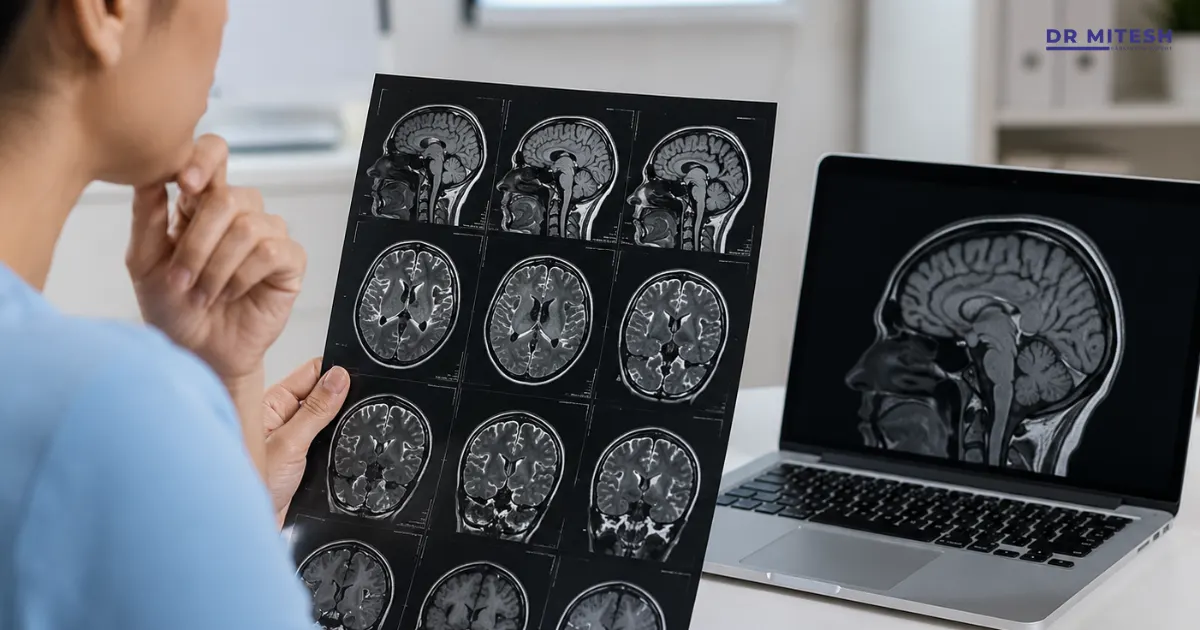
- Brain MRI – to map the exact target areas in the brain
- Neuropsychological testing – to assess memory and emotional health
- In-depth conversation with you and your family about expectations, benefits, and risks
Step 2 – The Surgery (2 Phases)
Phase 1 – Electrode Placement:
This is performed under local anaesthesia meaning you are awake but comfortable. Being awake allows us to interact with you during the procedure, confirming that the electrode is placed in exactly the right spot. A special 3D frame (stereotactic frame) ensures millimetre-level precision.
Phase 2 – Battery Implantation:
Done under general anaesthesia, this involves placing the pacemaker device (IPG) under the skin near the collarbone area. The wires are tunnelled under the skin to connect it to the brain electrodes. Most patients are discharged within 3–5 days.
Step 3 – Programming and Fine-Tuning
About 1–2 weeks after surgery, I activate the device and begin the programming process. This is where we fine-tune the electrical settings – frequency, amplitude, and pulse width – to find the optimal parameters for your brain. Programming takes time and multiple follow-up sessions. Every brain responds differently, and patience during this phase leads to the best long-term results.
What Results Can You Realistically Expect?
Patients who are well-selected for DBS typically experience:
- Significantly reduced tremors, stiffness, or uncontrolled movements
- Longer periods of symptom control throughout the day
- Reduced dependence on high-dose medications
- Better balance and walking
- Return to activities like cooking, driving, writing, and travelling
Important: DBS does not cure the underlying disease. But in the right patient, it can dramatically improve daily function and quality of life – often giving people back years of productive living.
Is DBS Safe? Understanding the Risks
DBS is a well-established, FDA-approved procedure that has been performed worldwide for over 25 years. When done by an experienced, specialised team, it is considered safe. That said, like any surgical procedure, it carries potential risks including:
- Infection at the surgical site (rare)
- Bleeding in the brain (very rare)
- Hardware issues like lead displacement or battery failure
- Temporary side effects during programming (easily corrected by adjusting settings)
One of the biggest advantages of DBS is that it is reversible – if needed, the device can be reprogrammed or turned off. This makes it a much safer long-term option compared to older ablative (tissue-destroying) brain surgeries.
A Message from Dr. Mitesh
“I have personally guided over 100 DBS patients through this journey from their first consultation to long-term follow-up. Every patient’s story is different. What I can tell you with confidence is this: when DBS is the right choice, it truly transforms lives. My patients go back to eating independently, playing with their grandchildren, writing, and travelling. That’s what makes this work so meaningful.”
Frequently Asked Questions
- Will I need to take medicines after DBS?
In most Parkinson’s cases, we can significantly reduce the dose of medicines after DBS. In some patients, a small maintenance dose may still be needed, but the amount is usually much lower. - How long does the DBS battery last?
The battery life depends on the stimulation settings used. Most batteries last 4–5 years, after which it can be replaced with a simple procedure. Rechargeable batteries are also available and can last significantly longer. - Can I have an MRI after DBS?
Yes, with modern DBS devices that are MRI-conditional, certain MRI scans can be done safely under specific guidelines. Always inform your doctor and radiologist that you have a DBS device. - How soon will I see improvement after DBS?
For Parkinson’s disease and tremors, improvement is often seen within weeks of programming. For dystonia, benefits may take 3-6 months to fully develop as the brain adapts to stimulation.
Is DBS the Right Step for You?
If you or a family member is living with Parkinson’s disease, severe tremors, or dystonia and medicines are no longer providing enough relief it may be time to explore DBS.
I am here to listen, evaluate, and guide you at every step. There is no pressure only honest, personalised advice based on your condition.
Book a Consultation:
- Call / WhatsApp: 08866843843
- Email: care@parkinsongujarat.com
- Medisquare Superspeciality Hospital, Gurukul, Ahmedabad
- Marengo CIMS Hospital, Sola, Ahmedabad