
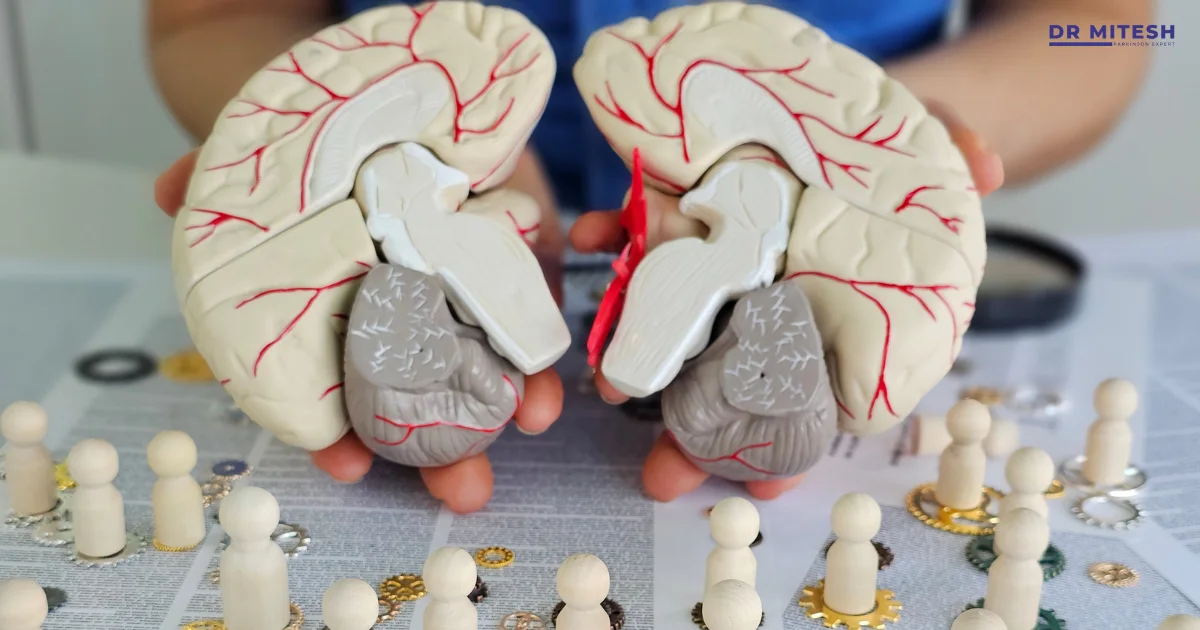
Multiple System Atrophy (MSA) is a rare and progressive neurological disorder that affects movement, balance, blood pressure, bladder function, and other automatic body functions. Because its symptoms often resemble Parkinson’s disease or cerebellar disorders, MSA can sometimes be difficult to recognize in the early stages.
Doctors generally classify MSA into two major types:
- MSA-P (Parkinsonian type)
- MSA-C (Cerebellar type)
Both are forms of the same disease, but they affect different parts of the brain more prominently. As a result, symptoms, daily challenges, treatment responses, and progression patterns may differ from person to person.
For many patients and families, hearing terms like “MSA-P” or “MSA-C” can feel confusing and overwhelming. Questions naturally arise:
- What do these terms mean?
- Is one type more serious?
- How are they different from Parkinson’s disease?
- Does the treatment change?
- What should families expect in the future?
Understanding the difference between MSA-P and MSA-C is important because it helps patients:
- recognize symptoms earlier
- understand disease progression
- plan supportive care
- seek the right medical attention sooner
This guide explains the key differences between MSA-P and MSA-C.
What Is Multiple System Atrophy (MSA)?
MSA is a progressive neurological condition in which nerve cells in different parts of the brain gradually degenerate.
The disease mainly affects:
- movement control
- balance and coordination
- blood pressure regulation
- bladder and bowel function
- speech and swallowing
- sleep and breathing
MSA belongs to a group of disorders called synucleinopathies, meaning abnormal alpha-synuclein protein accumulates inside brain cells.
Although MSA is rare, it can significantly affect quality of life over time.
Why Is MSA Divided Into MSA-P and MSA-C?
The classification depends on which symptoms are more dominant during the disease course.
| Type | Main Area Affected | Dominant Symptoms |
|---|---|---|
| MSA-P | Basal ganglia | Parkinson-like symptoms |
| MSA-C | Cerebellum | Balance and coordination problems |
Even though the symptoms may differ initially, both forms involve autonomic dysfunction and progressive neurological decline.
What Is MSA-P?
Understanding the Parkinsonian Type of MSA
MSA-P stands for Multiple System Atrophy – Parkinsonian type.
In this type, symptoms resemble Parkinson’s disease because the brain regions controlling movement become affected.
Common Symptoms of MSA-P
Patients may develop:
- stiffness
- slowed movements
- tremors
- muscle rigidity
- shuffling walk
- difficulty turning
- reduced facial expression
- soft speech
Many patients are initially diagnosed with Parkinson’s disease before the diagnosis of MSA becomes clearer.
How MSA-P Differs From Parkinson’s Disease
Although MSA-P can look similar to Parkinson’s disease early on, there are important differences.
| Parkinson’s Disease | MSA-P |
|---|---|
| Slower progression | Faster progression |
| Better response to levodopa | Limited or short-lived response |
| Tremor often prominent | Rigidity and balance issues more prominent |
| Autonomic symptoms appear later | Autonomic symptoms appear early |
| Falls occur later | Early falls are common |
This distinction matters because MSA usually progresses more rapidly than typical Parkinson’s disease.
What Is MSA-C?
Understanding the Cerebellar Type of MSA
MSA-C stands for Multiple System Atrophy – Cerebellar type.
In this form, the cerebellum – the brain region responsible for coordination and balance – is more heavily affected.
Common Symptoms of MSA-C
Patients often experience:
- unsteady walking
- poor balance
- clumsiness
- difficulty with coordination
- slurred speech
- shaky movements
- dizziness
- abnormal eye movements
Walking may appear wide-based or “drunken-like,” even though the patient has not consumed alcohol.
Key Differences Between MSA-P and MSA-C
Side-by-Side Comparison
| Feature | MSA-P | MSA-C |
|---|---|---|
| Main symptoms | Parkinson-like symptoms | Balance and coordination problems |
| Brain area mainly affected | Basal ganglia | Cerebellum |
| Walking pattern | Slow and stiff | Wide-based and unsteady |
| Tremors | Sometimes present | Less common |
| Speech | Soft speech | Slurred speech |
| Coordination problems | Mild initially | More severe |
| Misdiagnosed as | Parkinson’s disease | Cerebellar ataxia |
| Falls | Common | Very common |
| Response to levodopa | Partial or poor | Usually poor |
Symptoms That Occur in Both MSA-P and MSA-C
Although movement symptoms differ, both types commonly affect the autonomic nervous system.
Shared Symptoms Include
Blood Pressure Problems
Many patients develop:
- dizziness while standing
- fainting episodes
- low blood pressure
This is called orthostatic hypotension.
Bladder Dysfunction
Patients may experience:
- urinary urgency
- frequent urination
- incomplete bladder emptying
- urinary incontinence
Sometimes bladder symptoms appear years before movement symptoms.
Sleep Problems
Sleep disturbances are common in both forms of MSA.
These may include:
- acting out dreams
- abnormal breathing during sleep
- insomnia
- noisy breathing
- sudden jerking movements
Speech and Swallowing Difficulty
As the disease progresses, many patients develop:
- slurred speech
- choking while eating
- swallowing difficulty
- weak voice
These symptoms can significantly affect nutrition and communication.
Why Early Diagnosis Matters
Early diagnosis is extremely important because MSA symptoms progress over time.
A timely diagnosis helps families:
- understand the condition better
- avoid unnecessary treatments
- begin supportive therapies early
- plan for future care needs
Unfortunately, MSA is frequently misdiagnosed during the early stages because symptoms overlap with:
- Parkinson’s disease
- cerebellar ataxia
- peripheral neuropathy
- autonomic disorders
Learn more: https://parkinsongujarat.com/different-stages-of-msa-explained/
How Doctors Diagnose MSA-P and MSA-C
There is currently no single test that confirms MSA.
Diagnosis usually involves:
- neurological examination
- MRI brain imaging
- autonomic testing
- blood pressure evaluation
- sleep assessment
- clinical symptom analysis
MRI Findings
Certain MRI findings may support diagnosis.
In MSA-C:
Doctors may see:
- cerebellar shrinkage
- “hot cross bun sign” in the brainstem
In MSA-P:
MRI may show:
- changes in the basal ganglia
- putaminal abnormalities
MRI alone cannot confirm MSA but may support clinical findings.
Is One Type More Serious Than the Other?
Both MSA-P and MSA-C are serious progressive neurological disorders.
However:
- symptom patterns differ
- disability progression varies individually
- quality-of-life impact differs from person to person
Some patients with MSA-P struggle more with stiffness and mobility, while those with MSA-C may experience severe balance and coordination issues earlier.
The emotional and physical burden can be significant in both forms.
How Fast Does MSA Progress?
MSA generally progresses faster than Parkinson’s disease.
Symptoms often worsen over several years, affecting:
- walking
- speech
- swallowing
- independence
- blood pressure regulation
However, progression speed varies between individuals.
Some patients experience:
- rapid decline
- frequent falls
- increasing dependence
while others progress more gradually.
Treatment Options for MSA-P and MSA-C
Currently, there is no cure for MSA.
Treatment focuses on:
- symptom control
- improving daily function
- maintaining quality of life
Treatment Approaches for MSA-P
Patients with MSA-P may benefit from:
- levodopa medications
- physiotherapy
- walking support devices
- speech therapy
- balance training
However, medication response is often limited compared to Parkinson’s disease.
Treatment Approaches for MSA-C
Patients with MSA-C often require:
- balance-focused physiotherapy
- gait training
- fall prevention strategies
- occupational therapy
- speech therapy
Coordination issues may require earlier mobility support.
Managing Autonomic Symptoms in Both Types
Autonomic dysfunction often affects daily life significantly.
Management May Include
| Symptom | Possible Support |
|---|---|
| Low blood pressure | Increased fluids, compression stockings, medications |
| Bladder dysfunction | Bladder training, medications |
| Constipation | Fiber, hydration, bowel routine |
| Sleep problems | Sleep evaluation and therapy |
| Swallowing issues | Speech and swallow therapy |
Emotional Impact of MSA on Patients and Families
Living with MSA can feel emotionally overwhelming.
Patients may struggle with:
- loss of independence
- fear of progression
- social withdrawal
- anxiety
- depression
Caregivers may also experience:
- emotional exhaustion
- physical burnout
- uncertainty about the future
Supportive care and counselling are extremely important throughout the journey.
Daily Life Challenges in MSA
Even simple activities may gradually become difficult.
Patients may struggle with:
- climbing stairs
- writing
- dressing
- speaking clearly
- eating safely
- walking outdoors
Small modifications at home can improve safety and comfort significantly.
Practical Tips for Families Living With MSA
Helpful Strategies Include
- installing grab bars
- reducing fall hazards
- using walking aids early
- planning meals carefully
- monitoring swallowing problems
- encouraging supervised exercise
- maintaining hydration
- seeking emotional support
Care planning early often reduces future stress.
Frequently Asked Questions (FAQ)
- Which is more common: MSA-P or MSA-C?
MSA-P is more common in many Western countries, while MSA-C appears more frequently in some Asian populations. - Can MSA-P turn into MSA-C?
Not exactly. Both are forms of the same disease, but patients may eventually develop overlapping symptoms from both categories. - Is MSA hereditary?
Most cases are not directly inherited, although research continues regarding genetic influences. - Can levodopa help MSA-P?
Some patients experience temporary improvement, but the response is usually less effective than in Parkinson’s disease. - Does MSA affect life expectancy?
MSA is a progressive condition that can affect long-term survival, especially when swallowing and autonomic complications develop.
Final Thoughts
Understanding the difference between MSA-P and MSA-C helps patients and families recognize symptoms more clearly and prepare for the challenges ahead.
While both forms of MSA affect the nervous system differently, they share one important reality:
the need for early support, compassionate care, and multidisciplinary management.
Although there is currently no cure, many interventions can improve comfort, safety, mobility, and emotional wellbeing.
With:
- proper medical care
- physiotherapy
- speech therapy
- caregiver support
- symptom-focused treatment
patients can continue maintaining dignity and quality of life throughout the course of the disease.
Early recognition truly matters not only medically, but emotionally for patients and families trying to understand what lies ahead.
References
| Source | Information Covered |
|---|---|
| National Institute of Neurological Disorders and Stroke (NINDS) | MSA overview and symptoms |
| Cleveland Clinic | MSA diagnosis and management |
| Healthline | Differences between MSA and Parkinson’s disease |
| National Institute of Health | Autonomic dysfunction |
| MSA united | Patient and caregiver guidance |
| PSP Awareness | MSA progression and clinical features |