
Medically reviewed by Dr. Mitesh Chandarana | Last updated: October 2026
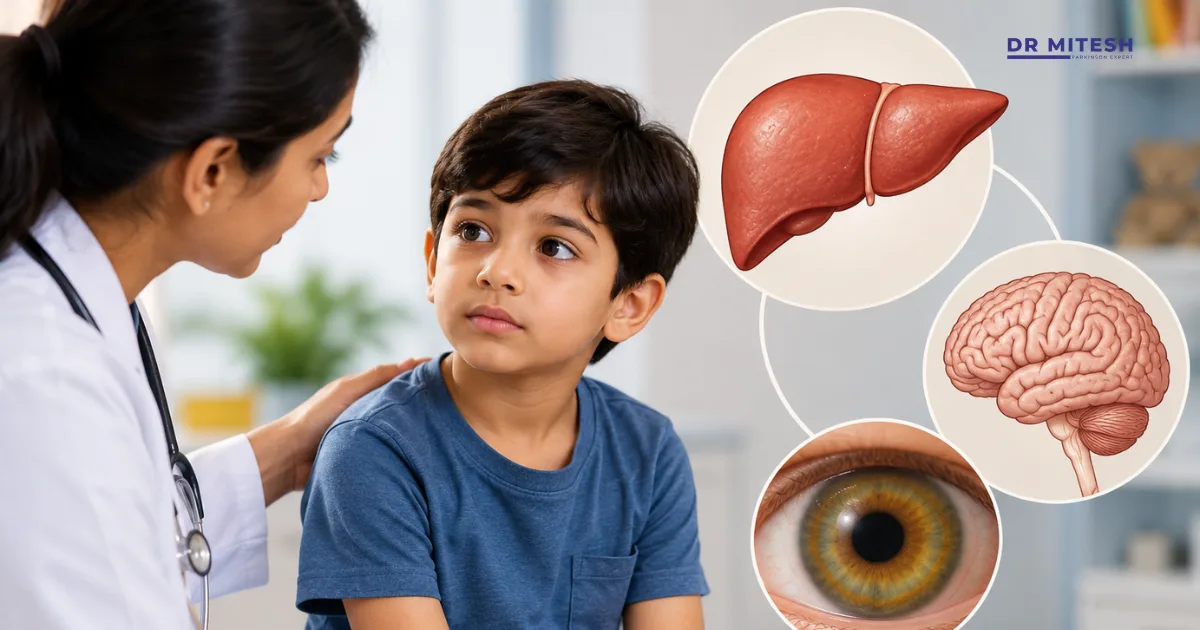
Wilson’s disease is an inherited condition in which the body cannot remove excess copper, so copper slowly builds up in the liver, brain, and eyes. It is rare, but it usually begins in childhood or the teenage years, which makes it one of the few serious neurological and liver conditions that parents can realistically catch early. Caught early and treated consistently, children with Wilson’s disease can grow up, study, and work normally.
(For the general picture of the disease and its treatment, see our guides on Can Wilson’s Disease Be Cured? and Wilson’s Disease Treatment. This piece focuses specifically on children and what parents should look out for.)
Why Children Are Different
Wilson’s disease is present from birth, but copper takes years to build up to harmful levels. In practice:
- Symptoms are very uncommon in the first few years of life. Most children are well as toddlers.
- The liver is often affected first in younger children. Some are found only because routine blood tests show raised liver enzymes.
- Brain and behaviour symptoms more often appear in the teenage years and early adulthood, although they can show up earlier.
- Some children have no symptoms at all and are diagnosed only because a brother or sister was diagnosed first.
Warning Signs Parents Can Notice
Liver-related signs
- Yellowing of the eyes or skin (jaundice) or dark urine
- Persistent tiredness, poor appetite, or nausea
- Swelling of the abdomen or legs
- Repeated “hepatitis-like” illness, or liver enzymes that stay raised without a clear cause
Changes in school performance and behaviour
This is the group of signs most easily missed. In children and teenagers, early brain involvement often looks like a school or behaviour problem rather than a medical one:
- A sudden drop in marks or difficulty concentrating
- Handwriting that becomes messy, smaller, or slower
- Mood swings, irritability, withdrawal, or unusual anxiety
- A new tremor, clumsiness, or drooling
- Slurred or quieter speech, or difficulty swallowing
In my practice, I see children who were first treated as having attention problems or “teenage behaviour” before Wilson’s disease was considered. A useful rule: when a previously well child develops new movement, speech, or handwriting changes, ask for a liver and copper check before settling on a behavioural explanation.
A note on the eye ring
The golden-brown ring at the edge of the cornea (the Kayser-Fleischer ring) is a classic sign of Wilson’s disease, but it is often absent in children whose illness mainly affects the liver. A normal eye examination does not rule the condition out.
How It Is Diagnosed in Children
There is no single test, so doctors combine several:
- Blood tests: liver function and ceruloplasmin (a copper-carrying protein, usually low in Wilson’s disease)
- Urine copper measurement
- Slit-lamp eye examination by an ophthalmologist
- Genetic testing for changes in the ATP7B gene, which is especially useful in children where the other tests are borderline
- MRI of the brain if there are neurological symptoms
Children are best assessed by a team that includes a paediatric liver specialist and a neurologist.
Brothers and Sisters
Wilson’s disease is inherited when both parents carry the gene, so each brother or sister of a diagnosed child should be tested, even if they feel completely well. Early treatment in a child with no symptoms can prevent the disease from developing at all. For the full explanation of inheritance, carrier testing, and family planning, see our guide on Wilson’s Disease and Family Planning: The Role of Genetic Counselling.
Treatment in Children
- Copper-removing medicines (chelators) or zinc, which reduces copper absorption from food. Your doctor chooses based on whether the liver or brain is affected and how severe it is.
- Treatment is lifelong. Even a child who feels completely well needs to continue it.
- Doses are adjusted as the child grows, so regular follow-up matters. Growth, weight, and appetite are checked at visits along with blood and urine copper levels. See Follow-Up Care in Wilson’s Disease for what is monitored.
- Some medicines need to be taken on an empty stomach, away from meals, so the dosing routine needs to be explained clearly to both parent and child.
Food and Daily Life
- Your doctor may advise limiting very high-copper foods, particularly early in treatment. Common examples include shellfish, organ meats, nuts, chocolate, and mushrooms. Do not restrict food more than advised, because children still need balanced nutrition to grow.
- Ask your doctor whether copper vessels or cookware, and the copper content of your household drinking water, are a concern in your home. Storing water in copper vessels is common in many Indian households, so raise it at your first visit.
- Normal school, play, and sports are encouraged once the child is stable.
The Hardest Part: Staying on Treatment
The biggest threat to a child with Wilson’s disease is not the medicine; it is stopping it. Because children feel well on treatment, stopping can seem harmless, and teenagers in particular may skip doses. Copper then builds up again, sometimes quickly, and serious liver or brain damage can follow. We explain this in detail in Why You Shouldn’t Stop Wilson’s Disease Treatment Too Soon.
What helps families:
- Link medicines to fixed daily routines, and use a weekly pill organiser or phone reminders
- Explain the disease to your child in age-appropriate words, and involve them in their own care as they get older
- Keep a spare supply, and never let the medicine run out during travel or exams
- Do not stop or change a medicine because of a side effect without calling your doctor first. Most problems can be managed with an adjustment
- Plan the move from paediatric to adult care in the late teens, so follow-up does not lapse
Supporting Your Child Emotionally
A lifelong diagnosis can feel heavy for a child or teenager. Keep the message balanced: this is a condition that is controlled with daily treatment, it is not their fault, and it does not limit what they can aim for. Let the school know about the diagnosis and any fatigue, medicine timing, or concentration issues, and watch for low mood or anxiety, which deserve their own support.
When to See a Specialist
Ask for an evaluation if your child has unexplained jaundice or raised liver enzymes, new tremor or handwriting change, slurred speech, a sudden change in behaviour or school performance, or a brother, sister, or parent with Wilson’s disease. Early screening is simple and low risk, and the benefit of catching this condition early is very large.
Concerned about your child’s symptoms or family history? Early evaluation makes a real difference. Book a consultation with Dr. Mitesh Chandarana, one of the best movement disorder specialists in Ahmedabad.