Medically reviewed by Dr. Mitesh Chandarana | Last updated: October 2026
You pick up a pen to sign a document, and your fingers tighten around it, your wrist bends, or your hand presses hard into the page. Yet the same hand can button a shirt, use a spoon, or type without difficulty. People with this pattern are often told they are stressed, that they grip too hard, or that they should simply write less. In some cases the cause is writer’s cramp, a task-specific form of dystonia, which is a recognised neurological condition.
What Writer’s Cramp Is
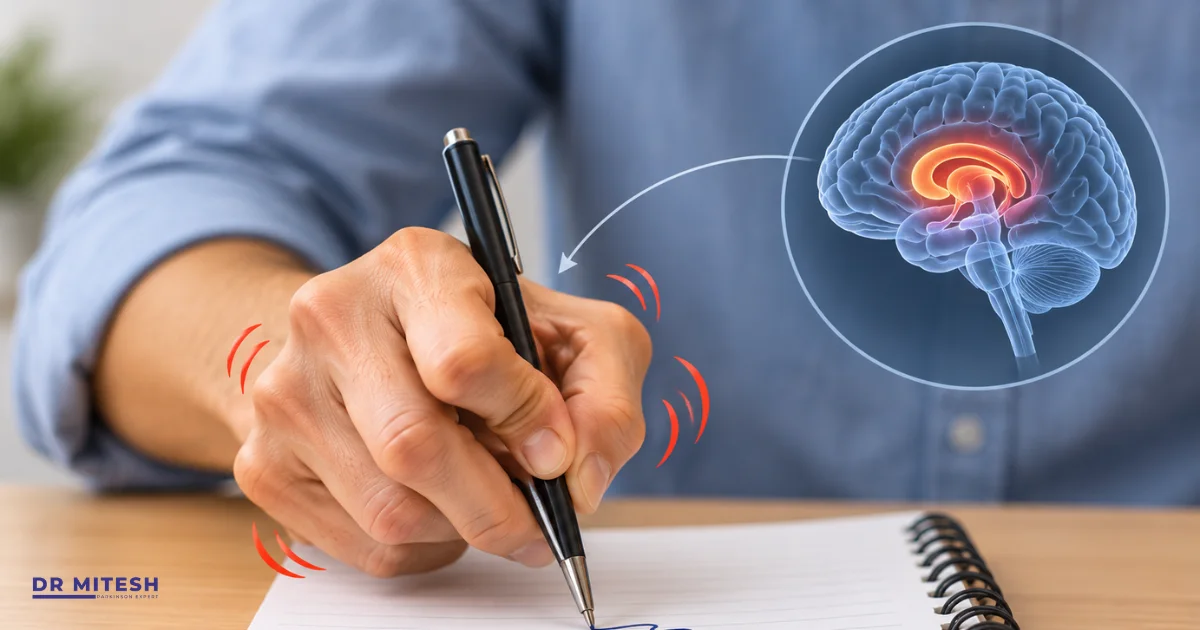
Writer’s cramp is a focal hand dystonia. “Focal” means it affects one body part, and “task-specific” means it appears mainly during one skilled activity, usually writing. The brain sends faulty signals to the muscles of the hand and forearm during that task, so muscles that should relax contract, or muscles that should work together work against each other.
It is not a sign of weakness, poor handwriting habits, or nervousness, although stress can make it worse. It reflects a problem with how the brain controls a highly practised movement.
What It Looks and Feels Like
- Fingers that curl into the palm or stretch out stiffly while holding the pen
- A wrist that bends or twists, or an elbow that lifts away from the body
- Excessive pressure on the pen and page, with the fingers or forearm tiring quickly
- Handwriting that becomes messy, slow, or effortful, or letters that change in size and shape within a sentence
- Symptoms that are worse with long or fast writing, and under pressure such as exams or signing in front of others
- Normal use of the hand for other tasks, at least at the beginning
The main complaint is usually loss of control rather than pain, although some people develop aching in the forearm from the effort of writing.
Simple versus dystonic writer’s cramp
In simple writer’s cramp, only writing is affected. In dystonic writer’s cramp, other hand tasks such as typing, shaving, using a phone, or using cutlery may also trigger symptoms. In some people the condition spreads from simple to dystonic over time.
Who Gets It
- It usually begins in adulthood and affects the dominant (writing) hand first.
- It is reported in people who do a lot of fine, repetitive hand work, such as clerks, students, writers, typists, tailors, surgeons, and musicians. In musicians the same condition is called musician’s cramp.
- Some people have relatives with dystonia, so a genetic tendency probably plays a role in a minority of cases.
- Overuse and stress are not thought to cause it on their own, but they may bring it out or worsen it.
Because writer’s cramp is often mistaken for a bad grip or a habit, people may spend months trying to “fix” their grip, which can increase tension and make symptoms worse. Understanding that it is a form of dystonia, not a habit, can reduce self-blame and shift attention to appropriate assessment.
Conditions That Can Look Similar
Doctors rule out other causes of hand problems before settling on writer’s cramp:
- Nerve entrapment such as carpal tunnel syndrome or ulnar neuropathy, which usually causes numbness or tingling
- Neck problems that pinch a nerve (cervical radiculopathy)
- Arthritis or tendon problems, which cause pain and swelling
- Writing tremor, where the hand shakes during writing. See Tremors: Causes, Symptoms, and Treatment
- Parkinson’s disease, where handwriting becomes steadily smaller (micrographia) rather than cramped. See Micrographia: Why Handwriting Shrinks in Parkinson’s
A key clue for writer’s cramp is that the problem is triggered by a specific task, strength is normal, and abnormal posturing or muscle overactivity is visible during writing.
How It Is Diagnosed
Diagnosis is mainly clinical. The doctor watches the person write, notes which muscles are overactive and what posture the hand takes, and examines the neck, nerves, and the rest of the body for signs of dystonia elsewhere. Nerve tests or imaging are used only when another cause is suspected.
Treatment Options
Botulinum toxin injections
Botulinum toxin is widely used for writer’s cramp. Small doses are injected into the specific forearm muscles that are overactive during writing, sometimes guided by electrical or ultrasound mapping. The effect usually begins within days and lasts around three months, so injections are repeated if needed. The aim is to reduce overactivity without weakening the hand too much to write. See Botulinum Toxin Therapy for Dystonia & Spasms. Response varies between individuals.
Retraining and occupational therapy
Sensory-motor retraining, grip and posture correction, and writing practice guided by a hand or occupational therapist are used, usually alongside other treatments.
Practical changes to how you write
- Use a thicker or cushioned pen, a pen grip, or a pen that needs less pressure
- Take frequent rest breaks and avoid long continuous writing sessions
- Write on a sloped surface and keep the forearm and shoulder relaxed
- Use a keyboard, tablet, or voice-to-text where possible if typing is unaffected
Oral medicines and surgery
Tablets are sometimes tried, but benefit is variable and side effects can limit their use. Surgery is rarely needed and is considered only in selected, severe cases.
Living With Writer’s Cramp
Stress and fatigue can worsen dystonia, so pacing the workday and managing high-pressure situations may help. For more, see Why Emotional and Physical Stress Worsen Dystonia. If your work depends on writing, it can help to discuss practical adjustments with your employer. Outcomes vary, and many people adapt their work with a combination of treatment and changes to how they write.
When to Seek Medical Advice
Consider a neurological assessment if cramping or odd posturing appears every time you write, rest and a change of pen do not help, other hand tasks are starting to be affected, or you have been treated for a hand or nerve problem without improvement.
About the reviewing doctor: Dr. Mitesh Chandarana, MBBS, MD (Internal Medicine), DM (Neurology), Fellowship in Movement Disorders (SCTIMST). Clinic address and appointment contact details are on the contact page.
This article is for general health education and is not a substitute for individual medical advice.