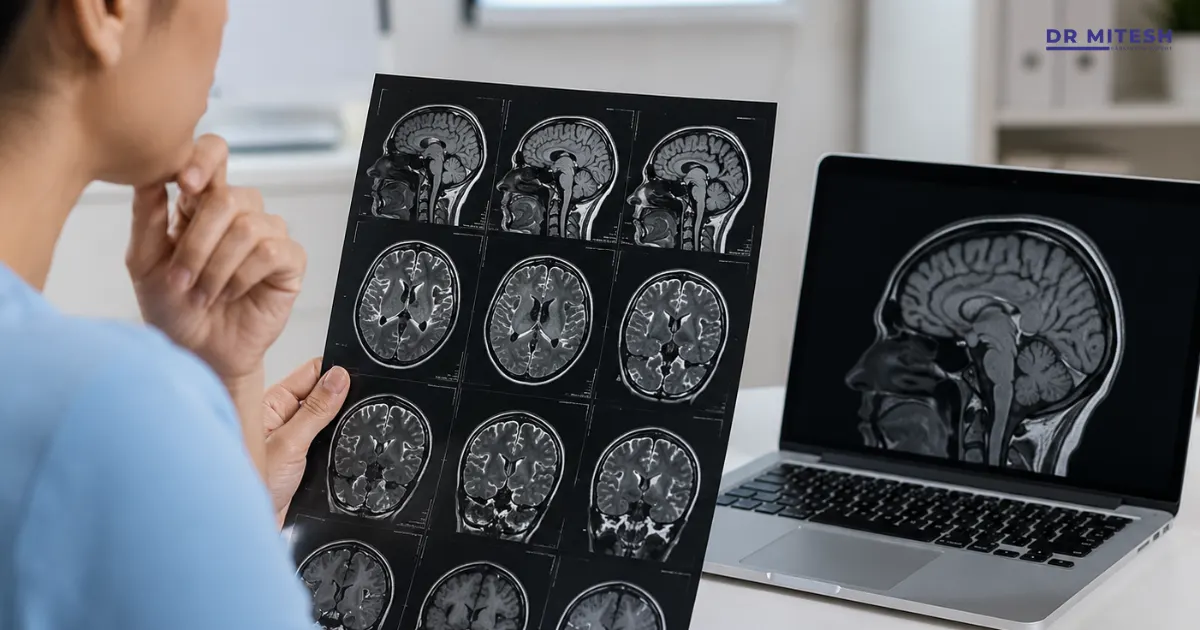

Many people feel anxious before their first visit to a neurologist. One of the most common questions patients ask is:
“Doctor, will I need a brain scan today?”
The short answer is not always.
Brain scans like MRI or CT are powerful tools, but they are not automatic tests done for every patient. A good neurological evaluation starts with listening, understanding symptoms, and examining the patient carefully. Only then does the doctor decide whether imaging is truly needed.
This blog explains when brain scans are necessary, when they are not, and why thoughtful decision-making matters for your health.
What Is a Brain Scan?
A brain scan is an imaging test that helps doctors look at the structure of the brain. The most commonly used scans in neurology are:
These tests help identify:
- Structural changes
- Bleeding or stroke
- Tumors or infections
- Certain degenerative conditions
However, not every neurological problem shows up on a scan.
Why Brain Scans Are Not Always Needed on the First Visit
Many neurological symptoms are functional, chemical, or electrical, not structural. This means the brain structure is normal, even though symptoms feel very real.
Doctors avoid ordering unnecessary tests because:
- Normal scans may not explain symptoms
- Scans can create anxiety if done without reason
- Some findings are harmless but confusing
- Over-testing increases cost without benefit
A careful neurologist prefers clinical judgment over routine testing.
What Happens First in a Neurology Visit?
Before deciding on any scan, a neurologist focuses on neurological evaluation tests, which include:
1. Detailed Medical History
- When symptoms started
- How they progressed
- Triggers or relieving factors
- Sleep, stress, medications, and lifestyle
2. Neurological Examination
- Muscle strength
- Reflexes
- Balance and coordination
- Sensation
- Speech and memory
This step alone can often narrow down the diagnosis significantly.
Learn More About Do I need to bring anything for Consulting Neurologist?
When Are Brain Scans Usually Needed?
Brain scans are recommended when symptoms suggest a structural problem.
Situations where imaging is commonly advised:
- Sudden weakness or paralysis
- Severe, new-onset headache
- Seizures starting in adulthood
- Head injury
- Vision loss or double vision
- Loss of consciousness
- Signs of stroke or brain infection
In these cases, waiting can be risky, so imaging is done promptly.
MRI Scan for Neurological Problems: When Is It Preferred?
MRI is the most detailed brain scan and is preferred when doctors need a clearer picture.
MRI is commonly used for:
- Persistent headaches with warning signs
- Multiple sclerosis suspicion
- Brain tumors
- Movement disorders with red flags
- Unexplained neurological deficits
MRI does not use radiation, but it takes longer and requires staying still.
CT Scan During Neurology Visit: When Is It Used?
A CT scan is faster and more widely available.
CT scans are preferred when:
- Emergency evaluation is needed
- Stroke or bleeding is suspected
- Head injury is recent
- MRI is not immediately available
CT scans are often the first test in emergency settings, followed by MRI if needed.
When Brain Scans Are Usually NOT Required Initially
Many common neurological complaints do not require immediate imaging.
Examples include:
- Tension headaches
- Migraine with typical features
- Anxiety-related symptoms
- Functional movement disorders
- Early Parkinson’s symptoms (often clinical diagnosis)
- Dizziness due to inner ear problems
- Sleep disorders
In these cases, observation, follow-up, or targeted tests are often more helpful.
Symptoms vs Need for Brain Scan
| Symptom | Brain Scan Needed Immediately? | Reason |
|---|---|---|
| Sudden weakness on one side | Yes | Possible stroke |
| Long-standing migraine | Usually No | Clinical diagnosis |
| Tremor with normal exam | No | Often functional or early |
| New seizures | Yes | Rule out structural cause |
| Memory issues slowly developing | Sometimes | Depends on exam |
| Stress-related symptoms | No | Scan often normal |
This table helps patients understand why decisions differ case to case.
Learn More About When Symptoms Are Complex, Healing Starts With Time and Care
Can a Normal Brain Scan Still Mean a Real Problem?
Yes and this is very important to understand.
A normal scan does not mean:
- Symptoms are imaginary
- Nothing is wrong
- The patient is “overthinking”
Many neurological conditions involve brain signaling, chemistry, or networks, which do not show up on scans.
This is why clinical expertise matters more than images alone.
Why Some Doctors Avoid “Scan First” Approach
Ordering scans without clear indication can:
- Delay proper treatment
- Create unnecessary fear
- Lead to confusing incidental findings
- Shift focus away from patient history
Modern neurology emphasizes:
- Right test
- Right time
- Right patient
This approach protects patients, not denies care.
Common Patient Concerns About Brain Scans
“If I don’t get a scan, will something be missed?”
A trained neurologist knows which warning signs require imaging. Missing serious problems is unlikely when evaluation is thorough.
“Should I ask for a scan just to be safe?”
Safety comes from correct diagnosis, not excessive testing. Scans are tools, not reassurance machines.
“Can symptoms worsen without a scan?”
Symptoms worsen when the underlying cause is untreated, not because a scan was delayed unnecessarily.
How Neurologists Decide: A Step-by-Step Thought Process
Doctors consider:
- Symptom pattern
- Speed of progression
- Exam findings
- Age and medical history
- Risk factors
Only when these suggest a structural issue do scans become essential.
Role of Follow-Up Visits
Sometimes scans are not needed on day one, but may be advised later if:
- Symptoms change
- New signs appear
- Treatment response is poor
This stepwise approach avoids rushed decisions.
What Reputable Medical Sources Say
Major neurological bodies agree that imaging should be judiciously used, including:
- Government neurology health portals
- Stroke and movement disorder guidelines
- Parkinson’s disease clinical recommendations
These emphasize clinical assessment first, imaging second.
Why a Thoughtful First Visit Matters
A good first neurology visit should leave you with:
- Clarity about your symptoms
- A plan, not just tests
- Confidence in the diagnostic process
- Trust that decisions are personalized
Scans are powerful but listening is more powerful.
Conclusion
Brain scans are valuable tools, but they are not mandatory for every patient or every first visit. The best neurological care begins with careful listening, examination, and understanding the person behind the symptoms.
When scans are needed, they are ordered without delay. When they are not, avoiding them is not neglect, it is good medicine.
Choosing a Neurologist who prioritizes thoughtful evaluation over routine testing ensures that your care is precise, humane, and truly focused on your well-being.
Authoritative References
- Wikipedia – MRI (Magnetic Resonance Imaging)
- Mayo Clinic – CT (Computed Tomography) Scan