
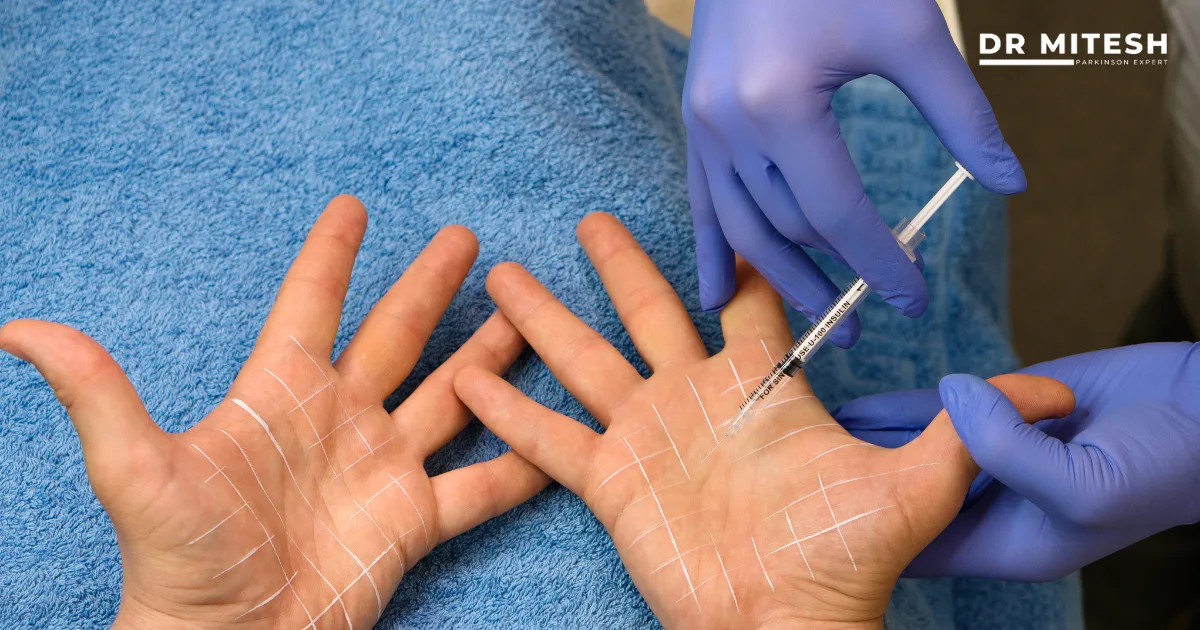
Botulinum injections often called Botox are widely used in neurology to treat muscle stiffness, spasms, abnormal movements, and certain pain-related conditions. Many patients feel clear relief after their first treatment, which naturally leads to an important and very common question: How many times can I take a botulinum injection? Is there a limit? Is it safe in the long term?
This blog answers these questions in simple, easy-to-understand language, based on medical evidence and real-world patient experience. It will help you make an informed decision without fear or confusion.
Why Are Botulinum Injections Used in Neurology?
Botulinum injections are used to relax muscles that are overactive or receiving excessive nerve signals.
Common neurological conditions treated
- Dystonia (neck twisting, facial spasms, limb stiffness)
- Muscle spasticity after stroke or brain injury
- Writer’s cramp and task-specific cramps
- Tremors with muscle overactivity
- Painful muscle spasms
These injections help improve comfort, movement, and daily function but they do not cure the underlying brain condition.
How Does a Botulinum Injection Work?
A botulinum injection works at the junction between nerves and muscles.
What happens after injection
- The medicine blocks excessive nerve signals
- The targeted muscle relaxes
- Pain, stiffness, or abnormal movement reduces
Important to know
- The effect is temporary
- Nerve function slowly recovers over time
- This is why repeat treatment is often needed
This directly connects to questions about the frequency of botulinum injections and long-term use.
Is There a Fixed Limit on How Many Times I Can Take Botulinum Injection?
No, there is no fixed lifetime limit.
Botulinum injection treatment can be repeated many times over years, as long as:
- It is medically indicated
- The patient is benefiting
- It is given at safe intervals
- It is administered by an experienced specialist
Many patients worldwide have safely received injections for 10–20 years or more.
How Often Is Botox Needed?
This is one of the most common patient concerns.
Typical treatment interval
- Effects begin: 3–7 days
- Peak benefit: 4–6 weeks
- Gradual wearing off: 3–4 months
Because of this pattern, how often Botox is needed is usually:
- Every 3 to 4 months for most patients
- Sometimes extended to 5–6 months in good responders
Giving injections too frequently is avoided to maintain safety and effectiveness.
Why Can’t Botulinum Injections Be Given Too Frequently?
Spacing injections properly is important.
Reasons for maintaining intervals
- Allows nerves to recover naturally
- Reduces risk of muscle weakness
- Prevents reduced response over time
- Maintains long-term safety
Most neurologists recommend at least 12 weeks between sessions.
Repeated Botulinum Injection Treatment: Is It Safe?
Many patients worry that repeated injections may damage nerves or muscles.
What medical evidence shows
- Long-term Botox use is well studied
- It does not damage the brain
- It does not destroy nerves permanently
- Side effects are usually mild and temporary
This makes repeated botulinum injection treatment a standard and accepted medical practice.
Long-Term Botox Injection Safety: What Should Patients Know?
Proven safety points
- Used in neurology for over 30 years
- Widely approved by regulatory authorities
- Safe when dosage and muscles are correctly chosen
Possible mild side effects
- Temporary weakness in nearby muscles
- Mild pain or bruising at injection site
- Temporary fatigue in treated area
Serious complications are rare when injections are given by trained specialists.
Can My Body Become Dependent on Botulinum Injection?
This is a common myth.
Truth
- Botox does not cause addiction
- It does not create chemical dependence
- Stopping injections does not worsen the disease
If injections are stopped, symptoms usually return to their original level, not worse.
Does Botulinum Injection Stop Working Over Time?
Some patients worry about reduced benefit after years.
What actually happens
- True resistance is very rare
- Reduced benefit often relates to:
- Disease progression
- Change in muscle pattern
- Need for dose adjustment
Experienced doctors adjust technique, dose, or muscle selection to maintain benefit.
How Many Years Can a Patient Continue Botulinum Injections?
There is no maximum number of years.
Patients may continue as long as:
- The treatment improves quality of life
- Side effects remain minimal
- The condition requires symptom control
For many chronic movement disorders, Botox becomes part of a long-term management plan, similar to medicines taken for blood pressure or Parkinson’s disease.
Botulinum Injection Along With Other Therapies
Botulinum injections work best when combined with:
- Physiotherapy
- Stretching and muscle retraining
- Occupational therapy
- Lifestyle modifications
This combination may allow longer gaps between injections in some patients.
Situations Where Injection Frequency May Change
Injection intervals may be adjusted if:
- Symptoms improve significantly
- Muscle pattern changes
- New muscles become involved
- Side effects occur
Treatment is always individualized, not one-size-fits-all.
Short-Term vs Long-Term Use
| Aspect | Short-Term Use | Long-Term Use |
|---|---|---|
| Safety | Very high | Very high with monitoring |
| Benefit | Symptom relief | Sustained quality of life |
| Risk | Minimal | Minimal when supervised |
| Dependence | No | No |
| Brain impact | None | None |
Common Patient Concerns Answered
“Will I need injections for life?”
Not always. Some patients space treatments or stop if symptoms stabilize.
“Is it harmful to take Botox for many years?”
No, long-term Botox injection safety is well established when properly given.
“Can I delay injections if symptoms are mild?”
Yes. Treatment timing depends on symptom severity and patient comfort.
Frequently Asked Questions (FAQs)
1. How many times can I take botulinum injection safely?
There is no fixed limit. It can be taken repeatedly over many years under medical supervision.
2. What is the usual frequency of botulinum injections?
Most patients receive injections every 3–4 months.
3. Is long-term Botox injection harmful to muscles?
No. Muscles recover naturally as the effect wears off.
4. Can I stop injections anytime?
Yes. Stopping does not cause withdrawal or worsening beyond baseline.
5. Does Botox affect the brain if used repeatedly?
No. It works only at the muscle level and does not enter the brain.
Conclusion
Botulinum injection is a safe, effective, and repeatable treatment for many movement and muscle-related neurological conditions. There is no fixed limit on how many times it can be taken, as long as injections are spaced appropriately and given for the right reasons.
The key to long-term success lies in correct diagnosis, precise injection technique, and expert clinical judgment. Consulting Botulinum Injection Specialist in Ahmedabad ensures that botulinum injections are used wisely maximizing benefit while maintaining long-term safety.
With proper care, many patients continue botulinum injection treatment for years, enjoying better movement, less pain, and a significantly improved quality of life.
Authoritative References
- PubMed Central – Frequency of Botulinum Injection