Health education content. Medically reviewed by Dr. Mitesh Chandarana
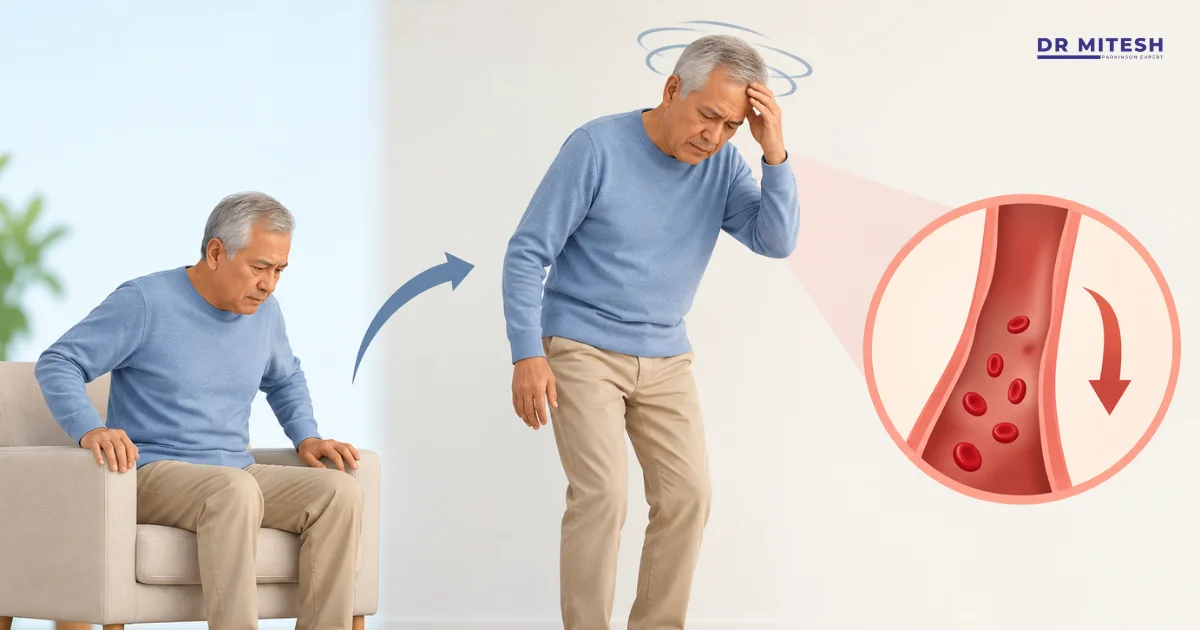
Standing up from a chair or getting out of bed and feeling the room swim, the vision grey out, or the legs go weak is a common experience for people with Parkinson’s disease. It is often put down to age, tiredness, or “low blood pressure,” and it frequently goes unmentioned at appointments. In many cases the cause is orthostatic hypotension, a fall in blood pressure when standing. It is a recognised non-motor feature of Parkinson’s, and it is a significant contributor to falls.
(Orthostatic hypotension also occurs in multiple system atrophy and other conditions. This article focuses on Parkinson’s disease. For the MSA picture, see Balance Problems, Fainting, or Stiffness? When It Could Be MSA.)
What Orthostatic Hypotension Is
When you stand, gravity pulls blood toward the legs. Normally the body responds within seconds by tightening blood vessels and slightly raising the heart rate, so blood pressure stays steady. Orthostatic hypotension is usually defined as a drop in systolic blood pressure of at least 20 mmHg, or diastolic pressure of at least 10 mmHg, within three minutes of standing.
How Common Is It in Parkinson’s?
Studies suggest that orthostatic hypotension affects roughly 30 to 50 percent of people with Parkinson’s disease, and it is often under-recognised. It becomes more likely with longer disease duration and older age, but it can occur at any stage.
Why It Happens
- Parkinson’s itself. The disease can affect the autonomic nerves that control blood vessels and heart rate, so the body’s automatic response to standing is weaker.
- Parkinson’s medicines. Levodopa, dopamine agonists, and some other medicines can lower blood pressure.
- Other medicines. Blood pressure tablets, diuretics, some prostate and bladder medicines, certain antidepressants, and sedatives can add to the effect.
- Dehydration, heat, large meals, and alcohol, which can all lower blood pressure further.
- Reduced activity and anaemia, which can make symptoms worse.
What It Can Feel Like
- Light-headedness or dizziness on standing or after standing for a while
- Dimming or greying of vision, or “tunnel vision”
- Weakness, unsteadiness, or the feeling that the legs will give way
- Fainting or near-fainting, and falls
- Fatigue, trouble concentrating, or confusion
- Pain or ache across the neck and shoulders (sometimes called a “coat-hanger” ache)
Symptoms are often worse in the morning, after meals, in hot weather, after a hot bath, and after exertion. Some people have a clear drop in blood pressure with few symptoms, which is one reason it is often missed.
How It Is Checked
- Lying and standing blood pressure. After resting lying down for about five minutes, blood pressure and pulse are measured. The person then stands, and measurements are repeated at one and three minutes.
- Home readings. A single clinic reading can miss the problem. In one study of people with Parkinson’s, repeated home measurements picked up a drop in blood pressure in many more people than a single clinic check. Doctors may ask for a home record. Have someone with you, and sit down straight away if you feel faint.
- Review of medicines, and sometimes blood tests, heart assessment, or further autonomic testing to look for other contributors.
Simple Measures That Often Help
- Stand up slowly. Sit on the edge of the bed for a minute before standing, and pause after standing before walking.
- Drink enough fluids, particularly in hot weather. The right amount depends on heart and kidney health, so check with your doctor. Drinking a glass or two of water shortly before getting up can raise blood pressure for a short time in some people.
- Salt. Some people are advised to increase salt intake, but this is not suitable for everyone, so it should be done only on medical advice.
- Eat smaller, more frequent meals and limit alcohol, since large meals can lower blood pressure.
- Avoid hot baths and prolonged standing, and use a seat in the shower.
- Raise the head of the bed slightly at night, if your doctor agrees.
- Compression stockings or an abdominal binder may help some people.
- Counter-manoeuvres: crossing the legs, tensing the leg and buttock muscles, or marching on the spot can briefly raise blood pressure when symptoms start.
- Stay active. Regular exercise supported by a physiotherapist helps overall circulation and conditioning.
Medical Treatment
If simple measures are not enough, the treating doctor may first adjust medicines that are lowering blood pressure, including Parkinson’s medicines and other tablets. Medicines that raise blood pressure, such as fludrocortisone, midodrine, or in some countries droxidopa, are sometimes used. All of them have side effects, including raised blood pressure when lying down, so they should be used only under medical supervision. Please do not change or stop any medicine on your own.
A note on high blood pressure when lying down
Some people with Parkinson’s and orthostatic hypotension also have high blood pressure when lying flat. This affects treatment choices, including the timing of medicines and the use of head-up bed positioning, which is why the doctor needs lying and standing readings, not a single number.
Falls and Safety
Low blood pressure on standing is one of several reasons for falls in Parkinson’s. See What Frequent Falling Means and Loss of Balance: When Should You Worry?. Practical steps include keeping a chair nearby, using handrails, avoiding rushing to the bathroom at night, and removing trip hazards.
Other Autonomic Symptoms
Orthostatic hypotension is one of several non-movement symptoms, along with constipation, bladder changes, and sweating changes. See Non-Motor Symptoms of Parkinson’s: The Hidden Side and Parkinson’s and Constipation: Causes and Relief.
When Early or Severe Orthostatic Hypotension Needs a Second Look
Marked blood pressure drops and fainting that appear early, before or soon after the movement symptoms begin, together with early bladder problems and a limited response to Parkinson’s medicines, can point toward another condition such as multiple system atrophy. See Why MSA Is Misdiagnosed as Parkinson’s Disease and MSA vs Parkinson’s.
When to Seek Medical Advice
Mention dizziness on standing to your neurologist, even if it seems minor. Seek prompt medical attention if you have fainted, have had a fall with injury, or are having frequent near-faints. Seek emergency help for chest pain, a racing or irregular heartbeat, sudden severe headache, sudden weakness on one side, or difficulty speaking.
About the reviewing doctor: Dr. Mitesh Chandarana, MBBS, MD (Internal Medicine), DM (Neurology), Fellowship in Movement Disorders (SCTIMST). Clinic address and appointment contact details are on the contact page.
This article is for general health education and is not a substitute for individual medical advice.