Many people hear “Parkinson’s” and think immediately of tremors and stiffness. Others who see someone stagger or sway might suspect “ataxia.” But what sets these apart? When doctors consider how to diagnose ataxia and Parkinson’s, they look at specific signs, test patterns, and brain systems involved. Understanding Ataxia vs Parkinson’s helps patients, families, and caregivers ask informed questions and get the right care.
What Are Ataxia and Parkinson’s?
Ataxia
- Ataxia refers to lack of coordination in movement, often causing a person to appear unsteady, clumsy, or imprecise.
- It is not due to muscle weakness; rather it is a problem in controlling and coordinating muscle actions.
- Ataxia can arise from damage or dysfunction in the cerebellum, sensory pathways (feedback about limb position), or vestibular systems.
- Types include cerebellar, sensory, and vestibular ataxia.
- Causes might be genetic, acquired (stroke, trauma, toxin exposure), or idiopathic (unknown).
Parkinson’s Disease
- Parkinson’s Disease is a neurodegenerative disorder characterized by slowness of movement (bradykinesia), rigidity (stiffness), resting tremor, and postural instability.
- The primary brain region involved is the basal ganglia, particularly dopamine-producing neurons in the substantia nigra. Their degeneration disrupts motor control.
- Parkinson’s is often grouped under movement disorders, along with ataxia and others.
- Unlike ataxia, Parkinson’s generally does not begin with severe coordination loss; instead, its hallmark is slowness and rigidity.
Ataxia is a coordination problem, whereas Parkinson’s is a movement initiation/speed & control problem.
Learn More About How Soon Should Parkinson’s Treatment Begin? Why Early Care Matters.
Symptom Comparison: Ataxia and Parkinson’s Symptoms Comparison
To see difference between ataxia and Parkinson’s disease more clearly, here’s side-by-side:
| Feature | Ataxia | Parkinson’s Disease |
|---|---|---|
| Primary issue | Poor coordination, unsteady gait, overshooting movements (dysmetria) | Slowness, stiffness, tremor, reduced movement amplitude |
| Gait & walking | A wide-based, unsteady, swaying, variable steps | Shuffling gait, small steps, reduced arm swing, stooped posture |
| Tremor type | Intention (tremor during purposeful movement) or terminal tremor in limb endpoints | Resting tremor (e.g. “pill-rolling”), often present when limb is at rest |
| Rigidity / stiffness | Usually not a feature | Common and early sign in Parkinson’s |
| Coordination tests (finger-nose, heel-shin) | Errors, overshoots, irregular path (dysdiadochokinesia) | Slowness and difficulty performing rapidly alternating movements, but not erratic path as in ataxia |
| Speech / swallowing | Slurred, scanning speech, variable rhythm | Soft or monotonic speech, reduced volume, speech rate slows |
| Onset & progression | Can begin at any age (especially with genetic ataxias) | Typically later life onset (age > 50), though early-onset forms exist |
| Other symptoms | Eye movement abnormalities (nystagmus), balance issues, sensory deficits (in some) | Autonomic symptoms (e.g. low blood pressure, constipation), sleep disturbance, mood changes |
From this table, one can better distinguish when observing a patient: is the problem erratic coordination or slow, stiff movement?
Interestingly, in rare cases, both ataxia and parkinsonism traits may co-occur. For example, some forms of parkinsonism include ataxic features, or certain spinocerebellar ataxias can show Parkinson-like signs.
Learn More About Parkinson Disease Management Beyond Medicine: Diet & Exercise Tips
Neurological Basis: Why the Differences Arise
To grasp ataxia vs Parkinson’s, knowing which brain areas are affected is key.
Brain Systems & Circuitry
- Ataxia is rooted in dysfunction of the cerebellum or its connections (afferent/efferent pathways). The cerebellum’s role is to coordinate and fine-tune movement, timing, and balance.
- If sensory inputs (from joints, inner ear) or feedback pathways are damaged, sensory ataxia may appear, where coordination fails because of poor internal feedback.
- Parkinson’s disease primarily involves the basal ganglia, especially dopamine-producing neurons in substantia nigra. Loss of dopamine leads to impaired regulation of movement initiation, amplitude, and suppression of unwanted movement.
- Because the basal ganglia influence “go / stop / modulate movement” signals, their dysfunction causes slowness, rigidity, tremors, and small movements rather than random miscoordination.
Thus, although both are movement disorders, the “where and how” of dysfunction differ.
Overlap & Mixed Syndromes
- Some conditions, like multiple system atrophy (MSA), share features of parkinsonism and ataxia. In MSA, degeneration affects both basal ganglia and cerebellar systems.
- Certain spinocerebellar ataxias (SCAs) may present with Parkinson-like features (rigidity, slowness) in addition to classic ataxia signs.
But these mixed cases highlight the importance of careful clinical assessment and imaging, rather than assumption.
Learn More About Exercise for Parkinson’s Patients.
How to Diagnose Ataxia and Parkinson’s
Distinguishing between these conditions is part art and part science. Understanding how to diagnose ataxia and Parkinson’s involves clinical evaluation, tests, imaging, and follow-up.
Clinical Examination & History
- Doctors will assess motor signs: gait, coordination tests (finger-nose, heel-shin, rapid alternating movements), tremors, tone, reflexes.
- A detailed history of symptom onset, progression, family history, and associated features (autonomic symptoms, sensory loss, vision issues) is vital.
- Identify red flags: rapid onset, asymmetry, early falls, poor response to Parkinson’s medications, these suggest atypical or mixed syndromes.
Laboratory & Genetic Tests
- For suspected ataxia, genetic panels (for known ataxia genes) may help, especially in younger patients or those with family history.
- Blood tests may check for metabolic, vitamin, toxic, or autoimmune causes of acquired ataxia.
Imaging & Neuroimaging
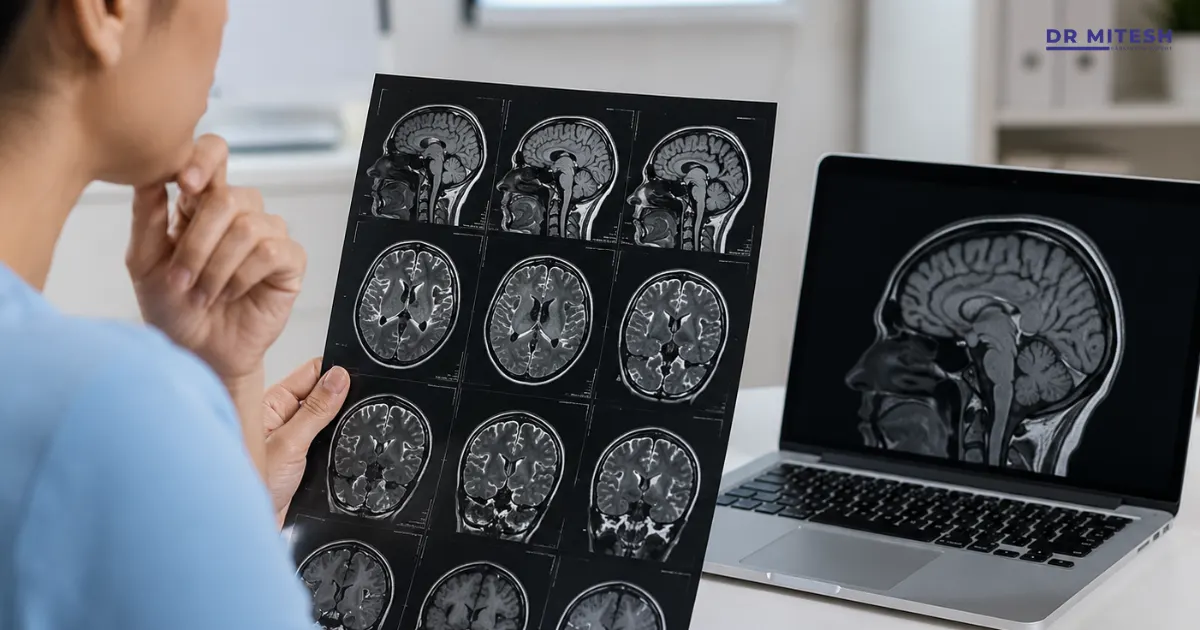
- MRI is often done to look for cerebellar atrophy, white matter changes, or signs in basal ganglia.
- In Parkinson’s evaluation, DaTscan (dopamine transporter imaging) may help confirm dopamine deficiency in basal ganglia circuits (though not definitive alone).
- In ambiguous cases, advanced gait/posture analysis or machine learning models have been studied to separate Parkinson’s from cerebellar ataxia reliably.
Response to Treatment
- Parkinsonian symptoms often respond (at least partially) to levodopa or other dopaminergic therapies.
- Ataxia typically does not respond to dopamine-based treatments, since the deficit lies in coordination circuits, not dopamine pathways.
Monitoring Over Time
- Serial exams, follow-up imaging, and observing progression help confirm a diagnosis.
- If new features (e.g. combination of ataxia + parkinsonism) appear, diagnosis may evolve (e.g. toward MSA).
Combining all these approaches helps clinicians distinguish ataxia vs Parkinson’s more confidently.
Learn More About Tic Disorders in Children: Can They Improve Over Time?
Treatment, Prognosis & Managing Each
Knowing ataxia vs Parkinson’s also means knowing how they differ in management and outcomes.
Treatment Approaches
For Parkinson’s
- Medications: Levodopa combined with carbidopa is a mainstay, along with dopamine agonists, MAO-B inhibitors, etc.
- Deep brain stimulation (DBS) may be considered in suitable candidates to improve symptoms.
- Physical therapy, exercise, speech therapy help with balance, gait, strength, and speech.
- Managing non-motor symptoms: mood, sleep, autonomic issues, cognition.
For Ataxia
- There is no cure for many genetic or degenerative ataxias.
- Treatment is symptomatic and supportive: physical therapy, occupational therapy, balance training, adaptive devices.
- In acquired ataxia (e.g. due to vitamin deficiency, toxins), treating the underlying cause can sometimes help.
- Speech therapy and assistive communication may help if speech is impacted.
Prognosis & Long-Term Outlook
- Parkinson’s disease is progressive, but symptoms often respond reasonably well to treatment, patients may live many years with quality of life support.
- Ataxias vary widely: some are slow and stable, others are progressive and severe. Genetic types often worsen over time.
- In overlap disorders (e.g. MSA), progression may be faster and treatment more challenging.
Supportive & Lifestyle Measures
- Regular exercise, balance training, home safety modifications
- Monitoring for falls, fractures, swallowing safety
- Psychological support, counseling, patient support groups
- Close follow-up with movement disorder neurologists
Because both conditions impact movement deeply, a multidisciplinary approach is often best.
Learn More About Tic Awareness in Schools: How Education Builds Inclusion.
Addressing Common Questions
Here are answers to frequent concerns people raise when comparing ataxia vs Parkinson’s:
Q1: Can a person have both ataxia and Parkinson’s?
Yes, in rare conditions like MSA, or certain genetic ataxias, features of both can appear. But for most individuals, the disorders remain distinct.
Q2: If I have tremor, does it mean Parkinson’s and not ataxia?
Not necessarily. Tremor in Parkinson’s tends to be a resting tremor. Ataxia often shows intention tremor (during movement) or endpoint tremor. The type, timing, and associated signs help distinguish.
Q3: Is coordination always better in Parkinson’s than ataxia?
In Parkinson’s, coordination is generally preserved but slower; in ataxia, coordination is disrupted. However, as diseases advance or overlap, things may blur.
Q4: How fast does each progress?
Parkinson’s often follows a gradual course over years. Genetic ataxias may progress slowly or moderately, but some acquired ataxias (e.g. due to toxins or stroke) may show more sudden onset or change.
Q5: Should I immediately get MRI or advanced imaging?
If symptoms are concerning or progressive, yes. MRI is often among the first tests a neurologist orders to identify cerebellar or basal ganglia changes, rule out structural causes, or detect mixed patterns.
Conclusion
Both Ataxia and Parkinson’s disease affect movement, but in entirely different ways. While ataxia makes movements uncoordinated and clumsy due to problems in the cerebellum, Parkinson’s causes slowness and stiffness because of changes in the basal ganglia and loss of dopamine. Understanding these differences helps patients and families recognize symptoms early, seek the right diagnosis, and get timely treatment.
With accurate evaluation, therapies like physical and occupational rehabilitation can improve balance and function in ataxia, while dopaminergic medications and modern techniques like deep brain stimulation can bring major relief in Parkinson’s.
Ultimately, movement disorders should never be self-diagnosed, even subtle signs deserve expert attention. Consulting the Best Neurologist ensures the right distinction between ataxia and Parkinson’s, personalized care, and the best chance at preserving mobility, confidence, and quality of life.
Authoritative References
- Cleveland Clinic – Ataxia
- National Library of Medicine – Ataxia vs Parkinson’s
- Wikipedia – Parkinson’s Disease