
Parkinson’s and Constipation: Causes and Relief

In fact, constipation is now recognized as one of the earliest signs of Parkinson’s disease, often appearing years, sometimes decades, before any tremor or movement symptom develops.
How to Prevent Falls in PSP: Home Safety Tips

This guide explains why PSP falls happen the way they do, and provides a practical, room-by-room approach to reducing fall risk at home.
Sleep Problems in MSA: Causes and Management

Research suggests up to 70% of MSA patients experience some form of sleep disorder, ranging from simple insomnia to more serious breathing-related issues during sleep.
पार्किंसंस और डिमेंशिया: इस संबंध को समझना

पार्किंसंस से हाल ही में पीड़ित पाए गए मरीज़ों और उनके परिवारों से मुझे अक्सर एक सवाल सुनने को मिलता है – जिसे वे अक्सर धीरे से पूछते हैं, या कभी-कभी जवाब के डर से पूछते ही नहीं कि क्या पार्किंसंस की वजह से आगे चलकर डिमेंशिया हो सकता है।
Parkinson’s and Dementia: Understanding the Connection
One of the questions I hear most often from newly diagnosed Parkinson’s patients and their families often asked quietly, sometimes not asked at all out of fear of the answer is whether Parkinson’s will eventually lead to dementia.
How to Read Your MRI Report: A Patient’s Guide
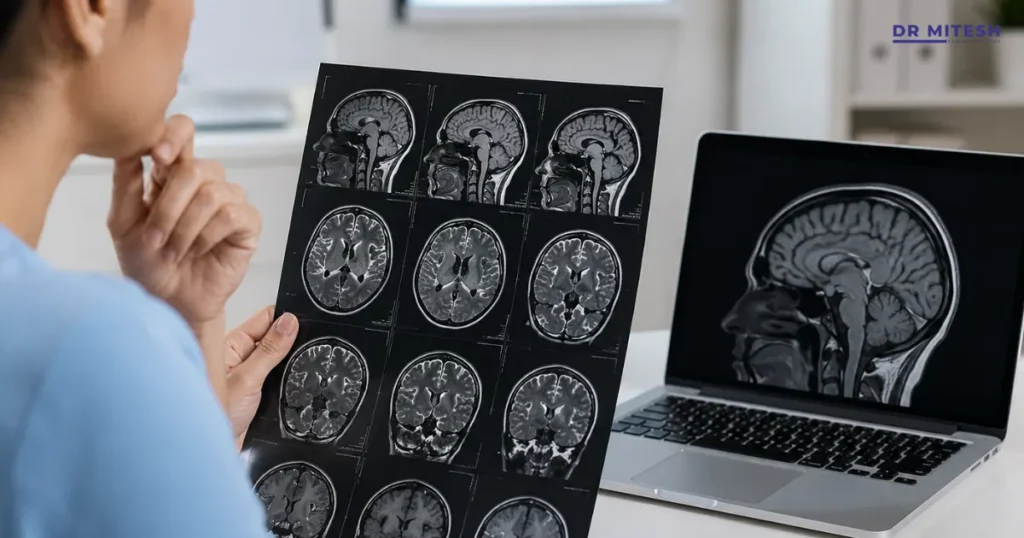
This guide won’t replace your neurologist’s interpretation – imaging always needs to be read alongside your symptoms and examination findings but it will help you understand the structure of a typical brain MRI report and what some of the most common terms actually mean.
Tardive Dyskinesia: What It Is, Who Gets It, and How to Treat It

Tardive Dyskinesia is a condition many patients and even some caregivers have never heard of until it appears, largely because it’s a delayed side effect that can show up long after a medication has seemingly been working well.
Huntington’s and Mental Health: Depression, Aggression, and Psychosis

Depression, aggression, and psychosis in Huntington’s disease aren’t side effects of coping with a difficult diagnosis – they’re direct manifestations of the same underlying brain changes that eventually cause the motor symptoms.
How Is RBD Diagnosed? Sleep Studies Explained
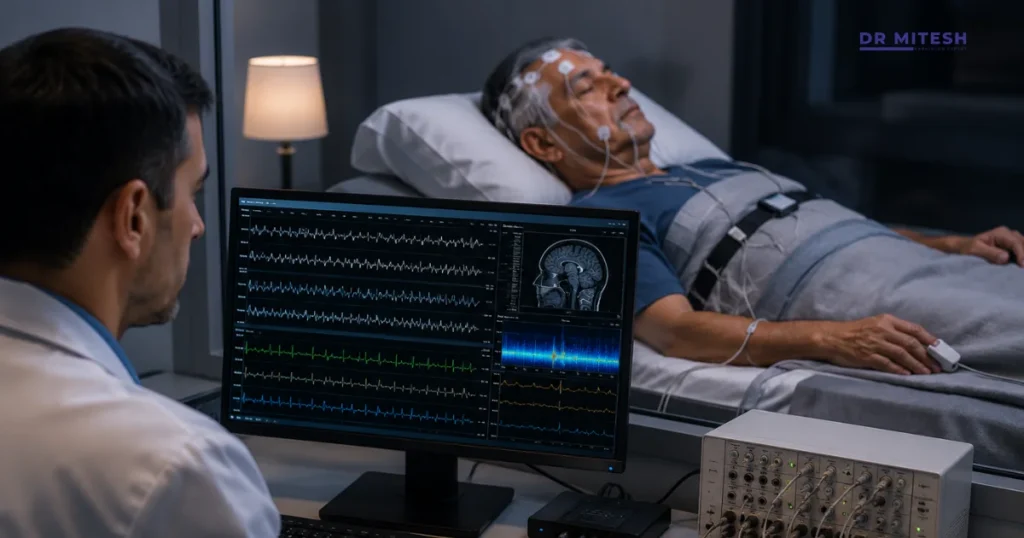
If you or a family member has been advised to undergo a sleep study to check for REM Sleep Behavior Disorder (RBD), the process can feel unfamiliar and, for some patients, a little intimidating. What exactly happens during the test? Do you need to stay overnight? Will it actually capture the behavior you’re worried about?
Botox for Spasticity After Stroke or Brain Injury

Botulinum toxin injections are one of the most effective tools available for managing this but in my experience, many patients and even some caregivers aren’t told about it until spasticity has already become severe.