
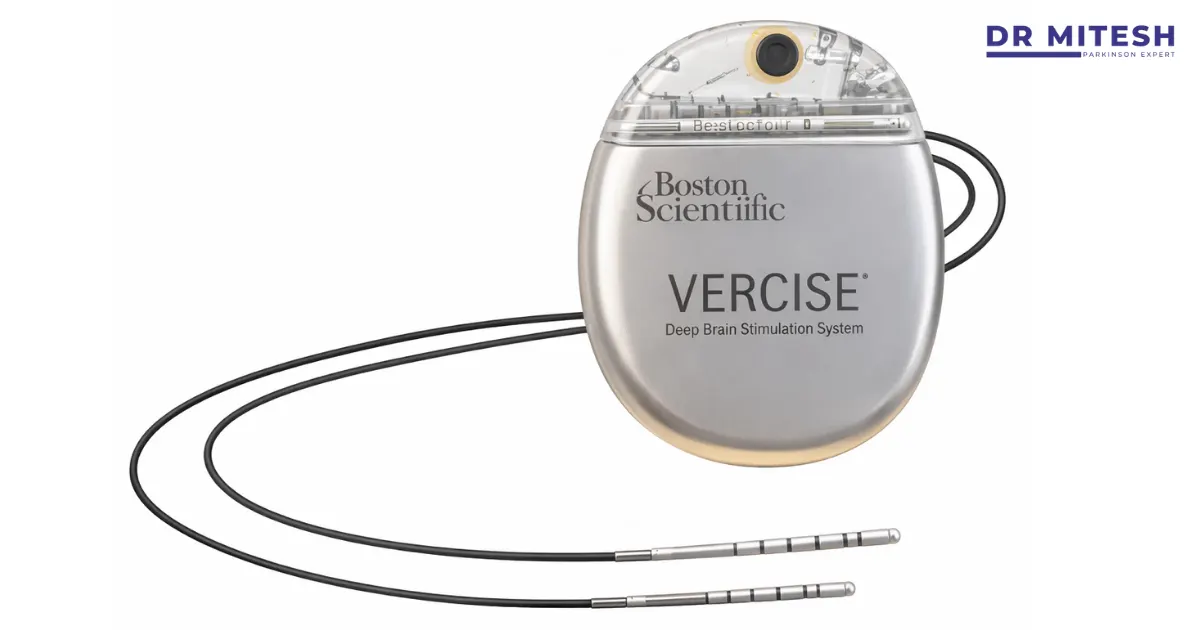
For patients considering or already living with Deep Brain Stimulation (DBS), one practical question comes up again and again:
“How long does the DBS battery last?”
Unlike medicines that need daily attention, DBS works quietly in the background. But the battery powering this system does not last forever. Understanding its lifespan, replacement process, and available options helps patients plan confidently and avoid unnecessary worry.
This blog explains everything you need to know about the DBS battery in simple language, with real-life clarity.
What Is a DBS Battery and Why Is It Important?
The DBS battery, also called the implantable pulse generator (IPG), is the power source of the DBS system.
What the battery does
- Sends electrical signals to the brain electrodes
- Controls symptom relief for conditions like:
- Parkinson’s disease
- Dystonia
- Essential tremor
- Works continuously, day and night
Without a functioning battery, DBS does not work, even if electrodes are perfectly placed.
DBS Battery Life: The Simple Answer
The life of a DBS battery depends on which type you have and how much stimulation is used.
Average DBS battery life
- Non-rechargeable battery:
👉 3 to 5 years - Rechargeable battery:
👉 9 to 15 years (sometimes longer)
So there is no single fixed number, it varies from patient to patient.
What Affects DBS Battery Life?
Several factors influence how long the battery lasts.
Key factors include
- Type of battery (rechargeable or non-rechargeable)
- Stimulation settings (higher settings drain faster)
- Number of active brain electrodes
- Condition being treated
- Daily usage duration
Patients with severe symptoms may need stronger stimulation, which can shorten battery life.
Learn More About Is DBS a Cure for Parkinson’s?
Types of DBS Batteries Explained
Understanding the two main battery types makes decision-making easier.
1. Non-Rechargeable DBS Battery
This is the traditional option.
Features
- Does not need charging
- Works automatically once implanted
- Battery runs out over time
Typical lifespan
- 3–5 years
Pros
- Simple to manage
- No daily or weekly charging
- Good for patients who prefer minimal device handling
Cons
- Requires surgical replacement when depleted
- More frequent replacement surgeries over a lifetime
2. Rechargeable DBS Battery
This is a newer and increasingly popular option.
Features
- Battery is recharged externally
- Charging is done through the skin
- Usually once every few days or weeks
Typical lifespan
- 9-15 years
Pros
- Fewer replacement surgeries
- Long-term convenience
- Cost-effective over time
Cons
- Requires regular charging discipline
- Not ideal for patients with memory issues unless caregivers help
DBS Battery Life Comparison Table
| Feature | Non-Rechargeable | Rechargeable |
|---|---|---|
| Average lifespan | 3-5 years | 9-15 years |
| Charging required | No | Yes |
| Replacement surgeries | More frequent | Less frequent |
| Daily involvement | Minimal | Moderate |
| Long-term cost | Higher | Lower |
How Often Is DBS Battery Changed?
This depends on the battery type.
Non-rechargeable
- Replacement every 3-5 years
- Earlier if high stimulation is needed
Rechargeable
- Replacement after 10+ years
- Sometimes longer with proper care
Doctors monitor battery levels during regular follow-ups, so replacement is planned not sudden.
Learn More About Does DBS Replace Parkinson’s Medicines?
How Do Doctors Know the Battery Is Running Low?
You do not have to guess.
Battery monitoring includes
- Device checks during clinic visits
- Programmer readings showing battery percentage
- Alerts well before the battery is fully drained
This allows enough time to schedule replacement comfortably.
What Happens When DBS Battery Is Low?
If the battery weakens:
- Symptoms may slowly return
- Tremor, stiffness, or slowness may increase
- Patients might feel DBS is “not working as before”
This is not dangerous, but it signals the need for replacement.
DBS Battery Replacement: Is It a Big Surgery?
Good news, it is much simpler than the first DBS surgery.
What battery replacement involves
- Only the chest battery is changed
- Brain electrodes remain untouched
- Surgery usually takes 30-60 minutes
- Often done under local or short general anesthesia
Recovery
- Mild soreness for a few days
- Most patients return home the same or next day
- Much easier than initial DBS implantation
Is Battery Replacement Painful?
Pain is usually mild and short-lived.
Patients typically experience:
- Temporary chest discomfort
- Minor swelling
- Relief with simple painkillers
Most say it is easier than dental procedures.
Can DBS Battery Be Replaced Before It Fully Drains?
Yes and this is actually preferred.
Doctors usually plan replacement when:
- Battery reaches a low but safe level
- Symptoms are still controlled
- Surgery can be scheduled calmly
Emergency replacements are very rare with proper follow-up.
Choosing Between Rechargeable and Non-Rechargeable Battery
There is no “one-size-fits-all” answer.
Rechargeable may be better if:
- You are younger
- You want fewer surgeries
- You can manage regular charging
- You have high stimulation needs
Non-rechargeable may be better if:
- You prefer simplicity
- You have difficulty remembering charging
- You have caregiver limitations
Your neurologist will help decide based on lifestyle and medical needs.
Learn More About Is DBS Surgery Painful? What You Really Experience
Common Patient Concerns About DBS Battery
“Will charging hurt?”
No. Charging is painless and done externally.
“Can I overcharge the battery?”
No. Modern systems stop charging automatically.
“What if I forget to charge?”
Missing one session usually causes no harm, but regular charging is important.
Long-Term Planning With DBS Battery
Living with DBS is a long-term journey.
Smart planning includes
- Knowing your battery type
- Keeping follow-up appointments
- Tracking symptom changes
- Discussing replacement timing early
This avoids sudden surprises and maintains consistent symptom control.
FAQs: How Long Does the DBS Battery Last?
1. How long does a DBS battery usually last?
Non-rechargeable batteries last 3-5 years, while rechargeable ones last 9-15 years.
2. Can DBS battery life be extended?
Yes. Lower stimulation settings and proper programming help conserve battery life.
3. Is DBS battery replacement risky?
No. It is a minor procedure with low risk.
4. Will my symptoms suddenly worsen if the battery dies?
Symptoms may return gradually, which is why replacements are planned early.
5. Is rechargeable DBS battery better for everyone?
Not always. The best choice depends on age, lifestyle, and ability to manage charging.
Conclusion
The DBS battery is a small device with a big role in maintaining symptom control and quality of life. While it does not last forever, modern options especially rechargeable batteries have made DBS a more convenient and long-term solution than ever before.
Understanding DBS battery life, replacement timing, and available options removes fear and helps patients plan ahead with confidence. With regular follow-ups and expert guidance from Movement Disorder Specialist in Ahmedabad, DBS becomes not just a treatment but a well-managed part of everyday life.
If you or your family are considering DBS or already living with it, knowing how the battery works is one of the most empowering steps you can take.
Authoritative References
- Science Direct – Implantable Pulse Generator