
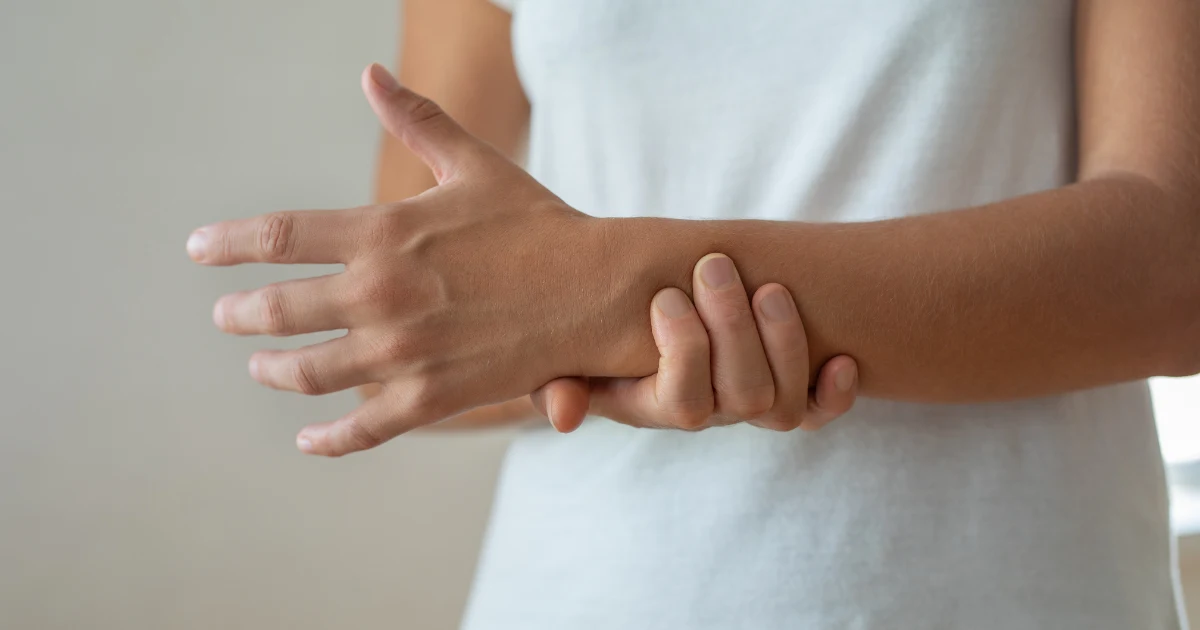
If your hand moves on its own reaching out, interfering with the other hand, or acting like it has a “mind of its own” you may have heard people call this alien hand syndrome. These uncontrolled hand movements are not about tics or simple twitching. In some cases, they are serious neurological signs linked to a rare condition called corticobasal degeneration (CBD). In this article, we explore the uncontrolled hand movements causes, describe the alien limb syndrome symptoms to watch for, explain why similar signs appear in CBD, and discuss how doctors approach treatment when someone asks, “why is my hand moving on its own?”.
What Is Alien Limb Syndrome?
- Definition: Alien limb syndrome (also called alien hand syndrome) is a neurological condition where a limb usually a hand performs actions involuntarily, and the person may feel that the limb does not belong to them.
- Strange sensation of ownership: People with this syndrome often describe a loss of agency the sense that they didn’t willingly control the movement.
- Connection to brain damage: The syndrome is most commonly associated with damage to parts of the brain that control movement and self-awareness, particularly in patients with corticobasal syndrome (CBS).
- Multiple causes: While corticobasal degeneration is a key cause, alien limb phenomenon can also occur after stroke, callosotomy surgery, or other brain injuries.
Learn More About CBD Symptoms Like Stiffness and Jerks: What Treatments Can Help
Why Does This Happen? What Are the Causes of Uncontrolled Hand Movements
Understanding why a hand moves on its own means looking at how the brain is wired and what happens when that wiring is disrupted.
- Brain region disconnection: In alien limb syndrome, the communication between brain areas responsible for planning movement (like the premotor or supplementary motor area) and those that control the muscles is disrupted.
- Parietal lobe involvement: Degeneration in the parietal cortex (which integrates sensory and spatial information) is often seen in patients with alien limb, especially in CBD.
- Tau protein pathology: In corticobasal degeneration, abnormal tau protein accumulates, leading to neuron damage in critical motor and sensory regions of the brain.
- Apraxia connection: Some patients with alien limb also have apraxia a disorder of purposeful movement but research suggests the two may arise independently rather than one causing the other.
- Lesions on MRI: Imaging studies have shown that patients with alien limb signs sometimes have atrophy or lesions in brain areas responsible for hand control and ownership.
Common Alien Limb Syndrome Symptoms to Recognize
Here are the alien limb syndrome symptoms that people most often report:
- Spontaneous reaching: The hand may reach out and grab objects without the person consciously instructing it.
- Interference: The “alien” hand may interfere with the actions of the other hand.
- Levitation / posturing: The affected limb may lift or assume odd postures “on its own.”
- Estrangement: A strong sense that the arm or hand is not “mine” anymore loss of ownership.
- Semi-purposeful movements: Although involuntary, movements can look deliberate at times like the hand is “acting.”
- Apraxia: Difficulty doing tasks on command not due to weakness, but because of impaired motor planning.
Learn More About CBD and Parkinson’s: Why Treatment Response Is Different
When This Happens in CBD: What Is “CBD Alien Limb”
Alien limb syndrome is especially important in the context of corticobasal degeneration (CBD) because:
- A large proportion of people with corticobasal syndrome (a clinical form of CBD) report alien limb phenomena.
- The alien limb in CBD often comes with other movement issues: stiffness, myoclonus (jerks), dystonia (abnormal posture), and apraxia.
- Within CBD, alien limb signs frequently appear on the less dominant side of the body.
- According to diagnostic criteria, alien limb is one of the clinical features that helps define corticobasal syndrome.
Why Is My Hand Moving On Its Own? Understanding the Experience
If you’re asking, “why is my hand moving on its own?”, it’s important to see how this can feel and what it tells your doctors:
- It’s not a tic or habit: Unlike tics or repetitive movements, alien limb actions are not repeated in a stereotyped way they are more unpredictable and not under voluntary control.
- It can feel alien: Patients often say the limb “does things I didn’t ask it to” or “it’s someone else’s arm.”
- Emotional impact: Seeing your hand do things independently can be frightening, confusing, or distressing many patients feel a loss of bodily ownership.
- Progression matters: In CBD, these symptoms tend to worsen as the disease affects more brain areas, so early awareness is helpful.
Learn More About Slowing MSA Symptoms: What Doctors Recommend
What Do Doctors Do to Diagnose It?
When someone reports uncontrolled hand movements, neurologists follow several steps:
- Medical history and exam
- Ask detailed questions about the hand’s behavior, when it started, and its pattern.
- Examine for associated symptoms: stiffness, apraxia, myoclonus, sensory loss.
- Neuroimaging
- MRI scans can reveal atrophy in areas like the parietal lobe or supplementary motor area, supporting alien limb diagnosis in CBD.
- Lesion studies or functional imaging may help rule out other causes (stroke, tumor, etc.).
- Neuropsychological testing
- Tests for apraxia and sense of agency: How well the patient can imitate or perform intentional movements.
- Assess cognitive functions, since alien limb often coexists with cognitive decline in CBD.
- Long-term follow-up
- Alien limb may evolve over time; repeated evaluations help track progression.
- Also, physicians monitor for other movement disorder signs (rigidity, myoclonus) to confirm an underlying diagnosis like CBD.
Learn More About Balance Problems, Fainting, or Stiffness? When It Could Be MSA
How Do You Treat or Manage These “Alien” Movements?
While there’s no cure that makes the “alienness” go away entirely, several strategies can help manage uncontrolled hand movement causes and reduce their impact on daily life.
Medication and Therapies
- Muscle relaxants: Drugs like baclofen may help reduce involuntary tone or contraction.
- Anti-myoclonic medications: If jerks are also present, medications like clonazepam or other anti-seizure drugs may be considered.
- Botulinum toxin (Botox): Injections into overactive muscles may reduce troublesome posturing or involuntary movement.
- Occupational therapy (OT):
- OT helps to develop strategies for controlling the limb, such as restraining it safely at times.
- Therapists may suggest weighted cuffs, arm splints, or adaptive devices to minimize interference.
- Physical therapy: Exercises to maintain strength, coordination, and flexibility in the affected limb and the rest of the body.
- Behavioral strategies:
- Replacing “alien” movement by prompting the patient to use the hand in tasks repetitively, which may re-establish some control.
- Mental imagery exercises: visualizing control over the limb might help reduce the feeling of estrangement though evidence is still limited.
Support and Coping
- Psychological support: Anxiety or distress about the loss of control is common. Counseling helps patients and caregivers cope emotionally.
- Safety planning: Because the hand may grab or interfere unexpectedly:
- Clear clutter, use padded surfaces, avoid dangerous objects.
- Use adaptive aids recommended by OT to prevent damage or injury.
- Education and reassurance: Understanding what’s happening in the brain helps both patient and family feel less frightened by the alien movements.
Learn More About Stages of MSA: Early, Middle, and Advanced Signs to Recognize
Are There Risks or Complications?
Yes, uncontrolled hand movement can lead to practical problems and emotional challenges:
- Self-injury: The “alien” hand might grab or hit things unintentionally, causing accidental injury.
- Interference with daily life: Tasks like dressing, eating, or personal care may become more difficult if one hand moves unpredictably.
- Psychological distress: The feeling of “this isn’t my hand” can be deeply unsettling and may contribute to depression or loss of self-confidence.
- Misdiagnosis: Without proper evaluation, alien limb syndrome may be misunderstood as a psychiatric or tic disorder rather than a neurological problem delaying correct care.
When to See a Specialist
If you notice uncontrolled hand movements that feel alien or you (or someone) believes the hand is acting independently:
- Bring it up with your neurologist, especially a movement-disorder specialist.
- Record videos of the hand behavior this can help your doctor see exactly what’s happening.
- Ask for a brain MRI and possible neurological workup if alien limb is suspected.
- Get a referral for occupational therapy early: they can help reduce the functional disruption.
- Consider psychological support: coping with alien limb involves emotional, not just physical, work.
Frequently Asked Questions (FAQ)
- Can alien limb syndrome be cured?
- No current cure exists. Management focuses on reducing distress, improving safety, and preserving function as much as possible.
- Is alien limb always part of CBD?
- Not always. While alien limb phenomenon is common in corticobasal syndrome, it can also result from other brain damages like stroke.
- Why does it feel like my hand belongs to someone else?
- Because the brain regions that synchronize intention and movement are disconnected or damaged, you may lose the feeling of agency (control) and ownership.
- Do people with alien hand syndrome have other movement issues?
- Yes. In CBD, alien limb often coexists with rigidity, myoclonus, dystonia, or apraxia.
- Should I restrict use of the affected hand?
- Occupational therapists often suggest strategies like using weighted cuffs or guided tasks rather than full restriction because some purposeful use helps maintain function.
Conclusion
Seeing your hand move involuntarily uncontrolled hand movement can be deeply disturbing, especially when it feels like your limb has a mind of its own. But in many cases, this may be a hallmark of alien limb syndrome, a complex neurological condition often tied to corticobasal degeneration. By understanding the alien limb syndrome symptoms, knowing the underlying uncontrolled hand movements causes, and working with specialists to manage it, you can regain some control or at least make the situation safer and less confusing.
If you’re experiencing these symptoms, reach out to Movement Disorder Specialist who specializes in Parkinson’s Disease. With the right care, therapy, and support, you can navigate alien limb challenges with clarity and dignity.
Authoritative References
- Mayo Clinic – Alien Hand Syndrome
- PubMed Central – Alien Limb in Corticobasal
- Wikipedia – Alien Hand Syndrome