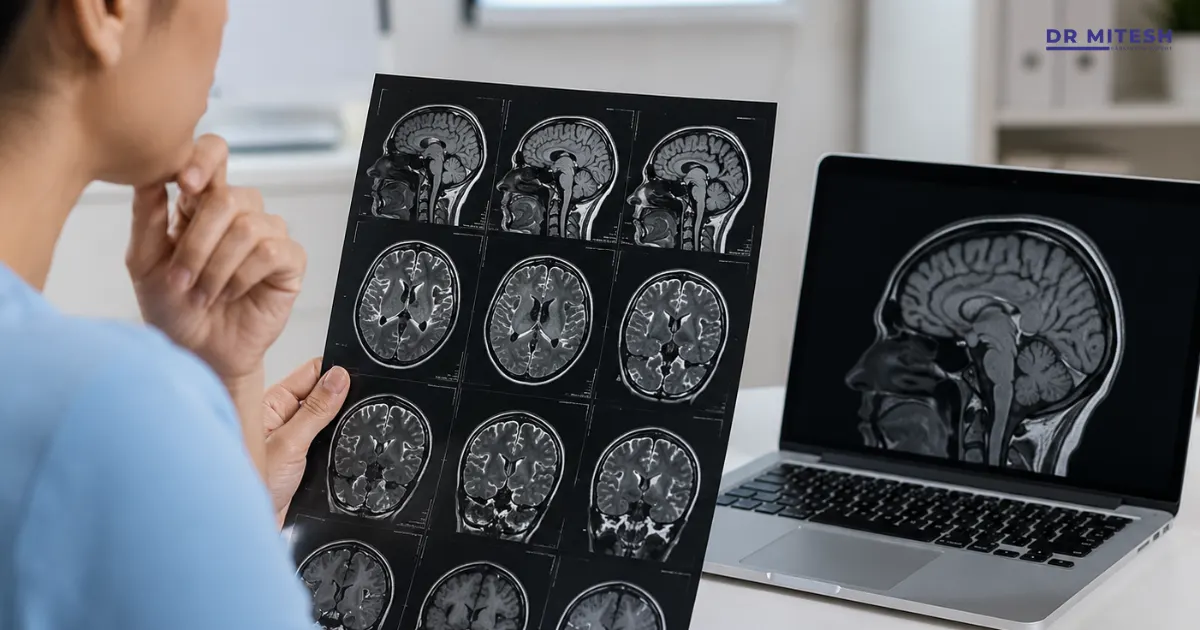

When the inherited condition commonly known as Huntington’s Disease, appears in early life, before adulthood it is often referred to as the juvenile form. In this article, we use the term “Juvenile Huntington’s” (onset before ~20 years) to describe that early-onset version. We will explain what differentiates it from the adult form, including its unique features, its genetic causes of juvenile Huntington’s, how it presents in children (“symptoms of juvenile Huntington’s”), why it is sometimes called early onset Huntington’s disease, and what families and clinicians should know about care and planning.
The aim is to keep the language simple and human, use bullet-lists and tables for clarity, and enable caregivers, parents, and young patients to better understand the condition. Where appropriate we’ll link to related blogs (for example your posts on genetic testing and managing Huntington’s) for further reading.
What is Juvenile Huntington’s?
- Juvenile Huntington’s is the form of Huntington’s Disease that begins in childhood or adolescence, typically defined as symptom onset before age 20.
- It is much rarer than adult-onset forms studies estimate it accounts for around 4-10% of all Huntington cases.
- Because the brain is still developing in children, the disease often shows distinct patterns compared to adult forms (different movements, cognitive issues, faster progression).
- The condition is inherited in an autosomal dominant fashion: a single mutated copy of the HTT gene causes the disorder. However, in juvenile forms the number of CAG repeats in that gene tends to be higher.
When you see signs of early-onset Huntington’s disease, it’s less about “just adult HD that happened early” and more about a modified clinical pattern due to earlier onset and greater genetic repeat expansions.
Learn More About Huntington’s Disease Testing: When and Why to Consider It.
Genetic Causes of Juvenile Huntington’s
Understanding what drives juvenile onset helps families and clinicians make sense of the condition.
Key genetic factors
- The causative gene is the HTT gene (Huntingtin). Mutations involve a CAG trinucleotide repeat expansion.
- In typical adult-onset forms, affected individuals may have 40-50 repeats; in juvenile onset often the repeat count is much higher (sometimes ≥ 60) and correlates with earlier onset.
- This phenomenon is known as anticipation: repeat lengths tend to increase when inherited from a father, which is a common pattern in juvenile cases.
- Because of the larger repeat number, the disease can progress more rapidly, and brain changes start earlier in life (including during brain development).
Implications for families
- Once one parent carries the mutated gene, each child has a 50% chance of inheriting it (autosomal dominant).
- Genetic counselling is essential for children, siblings, and families to explain risks, timing, and implications.
- The size of the repeat expansion is not a perfect predictor of exact age of onset or progression, but it provides useful guidance.
Because of these genetic features, juvenile-onset forms of Huntington’s differ meaningfully from adult-onset, both in genetics and clinical course.
Learn More About How to Tell Apart Huntington’s Disease from Parkinson’s Disease.
Symptoms of Juvenile Huntington’s
The pattern of early-onset Huntington’s in children and adolescents often differs from the classic adult form. Recognizing these signs helps in early diagnosis and intervention.
Movement and motor symptoms
- In children under ~10 years, typical signs include:
- Speech delay or slurred speech
- Gait disturbances (walking unsteadily or with a wide base)
- Rigidity, dystonia (abnormal muscle tone) more than chorea (wild involuntary movements) early on.
- In adolescents (onset age ~10-20), signs may resemble adult onset but often include more parkinsonian features (rigidity, slowness) rather than classic chorea.
- Seizures are more common in juvenile-onset than in adult forms (affecting around 30-50% of children in some series).
Cognitive, behavioral and educational issues
- Decline in school performance (trouble concentrating, dropping grades) is often an early red flag.
- Behavior changes: irritability, aggression, mood swings, ADHD-like symptoms may precede motor signs sometimes leading to misdiagnosis as behavioral disorders.
- Cognitive decline (thinking, planning, memory) may progress faster in juvenile onset than adult onset.
Other features and progression
- Faster progression: juvenile-onset cases often deteriorate more quickly and may have shorter disease duration after symptom onset.
- Some children may have weight loss, drooling, swallowing difficulties, and other complications early.
- Because symptoms overlap with other pediatric neurological or developmental disorders, diagnosis can be delayed.
Learn More About Managing Huntington’s Disease: Latest Therapies and Research Updates.
Symptom differences – Juvenile vs Adult onset
| Feature | Juvenile Form | Adult-Onset Form |
|---|---|---|
| Typical age at onset | <20 years (often <10 or adolescent) | ~30-50 years typical, but can be later |
| Movement patterns | Rigidity, dystonia, gait problems, less chorea early, seizures more common | Chorea is dominant early, gait/rigidity later, seizures rare |
| Cognitive/behavioral onset | Early school decline, behavior issues may precede motor signs | Often motor signs first, cognitive/psychiatric later |
| Progression speed | Faster progression, shorter duration | Slower progression (over many years or decades) |
| Genetic repeat size | Larger CAG repeat counts (often ≥ 60) | Lower counts (40-50 typical) |
| Family inheritance | Often paternal transmission, strong anticipation effect | Variable, sometimes maternal or de novo less common |
Why Early Onset Huntington’s Requires Specialized Care
Because the childhood form has distinct features and a rapid course, the care approach needs to be adjusted.
Key reasons for specialized attention
- Rapid changes: Early onset means the child’s brain is still developing; disease impacts growth, cognition, motor development more severely.
- Educational support needs: School functioning may deteriorate early; children may require special education plans, therapies for speech/motor/cognition.
- Family dynamics: Parents may be coping with their own diagnosis or risk; siblings and child support systems often face high demands.
- Multidisciplinary care: Neurologists, pediatricians, therapists (physical, occupational, speech), educational specialists, genetic counsellors all need to work together.
- Planning for progression: Given more aggressive course, earlier planning for nutrition, mobility support, safety, and advanced care is important.
Encouraging open communication, realistic planning and integrating care early can significantly improve the child’s quality of life and family resilience.
Learn More About Anti-inflammatory Diets and Their Role in Neurological Health.
What Families Should Do: Steps to Take
Here is a practical roadmap for families dealing with juvenile onset of this condition.
Step-by-step guidance
- Seek early evaluation: If a child with a parent who has Huntington’s shows unexplained gait problems, speech delay, seizures or academic decline, ask about specialized neurology referral.
- Genetic counselling and testing: Discuss with a specialist team whether genetic testing is appropriate (often complex in children) and understand risks, benefits and implications.
- Monitor and support schooling: Involve educational psychologists, ask for individualized education plan (IEP) with goals for motor/speech/academic support.
- Therapeutic interventions early: Initiate physical therapy (for gait/balance), occupational therapy (fine motor skills), speech therapy (language, swallowing).
- Lifestyle & home support: Ensure safe home environment (fall prevention), modify tasks for child’s evolving abilities, monitor nutrition/weight.
- Emotional & family support: Engage counsellors, support groups, sibling support early onset affects entire family.
- Advance care planning: Although difficult in childhood, discussions about future care needs, mobility aids, nutritional support, and palliative considerations may be necessary.
Because the onset is early, proactive support is especially important.
Learn More About Supplements for Brain Function: What Helps and What Doesn’t.
Common Questions & Concerns
Q: How is early onset different from adult onset?
A: As described above, the childhood form commonly shows rigidity and gait issues, often has seizures, progresses faster, and occurs with larger genetic repeats. The adult form often begins with chorea and has slower progression.
Q: If a parent has Huntington’s, does the child always inherit the juvenile form?
A: No. Even though the risk of inheriting the gene is 50% (autosomal dominant), whether the child develops juvenile onset depends on how many repeats they inherit, among other factors. Most children who inherit the gene will not have the early-onset (under age 20) form.
Q: Is there a cure for juvenile onset?
A: Currently there is no cure that reverses the genetic cause. Treatments are supportive physical/speech therapy, medications for movement or seizures. Research is active in adult and juvenile forms, so hope remains for the future.
Q: What treatments are available now?
A: Care is multidisciplinary:
- Movement-disorder neurologist managing medications (for rigidity, dystonia, seizures)
- Therapies: physical, occupational, speech
- Educational and psychosocial support
- Safety interventions for gait/fall risk
The goal is symptom management and improving quality of life.
Q: How should we prepare for the future?
A: Families should engage with specialists early, build strong care networks, monitor the child closely, adjust schooling and therapies over time, plan for mobility/feeding/communication changes, and stay connected to research communities. Genetic counselling remains key.
When to Seek Help: Warning Signs in Childhood
- Noticeable decline in school performance or attention in a child with family risk
- New gait problems (frequent falls, tripping, wide-based walking)
- Speech delay or sudden worsening of speech in a child at risk
- Unexplained seizures in a child with family history of Huntington’s
- Rigidity, dystonia, slowness of movement rather than classic “chorea”
If you observe any of these, ask a pediatric neurologist or movement-disorder specialist for an assessment.
Conclusion
Juvenile Huntington’s Disease is a rare but deeply impactful condition that challenges not only the child affected but also the entire family. Because it appears during critical years of brain and physical development, early identification and multidisciplinary management are essential. Understanding the genetic causes of juvenile Huntington’s, recognizing its early symptoms, and beginning supportive therapies at the right time can make a significant difference in how the disease progresses and how well a child adapts to daily life.
While no cure currently exists, advances in research and therapy continue to bring hope. The key lies in early diagnosis, continuous support, and individualized treatment plans guided by experts. Consulting a neurological disorder specialist someone experienced in both movement and developmental conditions can help families make informed decisions, manage symptoms effectively, and enhance the child’s quality of life.
By combining expert medical care, genetic counseling, and emotional support, families can navigate the challenges of Huntington’s disease in children with greater confidence, compassion, and clarity.
Authoritative References
- Genetic and Rare disease information center – Juvenile Huntington’s Disease
- Wikipedia – HTT Gene
- PubMed Center – Juvenile Huntington’s Disease
- Parkinson’s Foundation – Types of Parkinsonism
- Huntington’s Disease Society of America – Juvenile Huntington’s disease