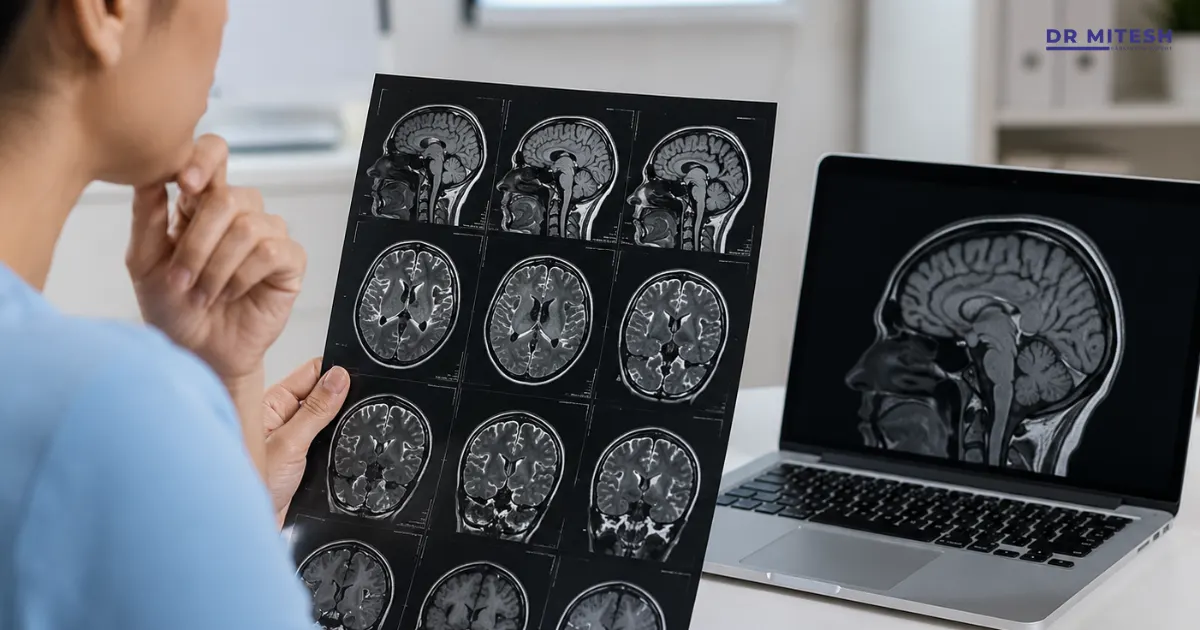

Parkinson’s disease does not usually begin with a dramatic event. Instead, it slowly changes everyday life. Simple tasks that once felt automatic like eating with a spoon, walking across a room, or signing your name may start to feel effortful.
If you are living with Parkinson’s, you may have asked yourself: “Which activity is becoming hardest for me?”
This question is more important than it seems. Identifying the most difficult task helps your neurologist adjust treatment and therapy in a practical way. Let’s look closely at how Eating, Writing, and Walking are commonly affected and what can be done.
Why Everyday Activities Become Difficult in Parkinson’s
Parkinson’s affects movement control in the brain. This can lead to:
- Slower movements (bradykinesia)
- Stiffness in muscles
- Tremors at rest
- Balance difficulties
- Reduced automatic coordination
These changes directly influence daily independence.
Eating: When Mealtime Becomes a Challenge
Eating is not just about nutrition it is social and emotional too. Parkinson’s can interfere in several ways.
Common difficulties include:
- Tremor while holding a spoon or cup
- Slowness in cutting food
- Food spilling from utensils
- Difficulty swallowing in later stages
- Fatigue during meals
These challenges may lead to:
- Avoiding social gatherings
- Taking much longer to finish meals
- Reduced appetite due to frustration
If you notice swallowing problems, this should be discussed promptly with your doctor, as therapy can help prevent complications.
Writing: Small Changes That Feel Big
One of the early signs of Parkinson’s can be subtle changes in handwriting. Many patients experience handwriting changes in Parkinson’s, where letters become smaller and cramped over time.
This is called micrographia.
Writing difficulty due to tremors or stiffness may include:
- Shaky signatures
- Reduced letter size
- Difficulty holding a pen steadily
- Slower note-taking
- Fatigue while filling forms
For working professionals or students, this can be especially distressing. It affects:
- Office documentation
- Personal communication
- Financial paperwork
If you relate to this, you may also find our blog Which Daily Activity Feels Most Difficult with Parkinson’s? helpful for understanding broader functional changes.
Walking: The Fear of Losing Balance
Walking problems often create the most anxiety. Movement may feel uncertain or unsteady.
Patients commonly report:
- Shuffling steps
- Reduced arm swing
- Difficulty turning
- Freezing in doorways
- Fear of falling
Walking issues can affect:
- Outdoor mobility
- Confidence in public spaces
- Ability to travel independently
If walking is becoming more difficult, timely medication adjustment and physiotherapy can make a significant difference.
Comparison Table: Eating vs Writing vs Walking
| Activity | Common Problem | Emotional Impact | Can Therapy Help? |
|---|---|---|---|
| Eating | Tremor, swallowing | Embarrassment | Yes |
| Writing | Small handwriting, shakiness | Frustration | Yes |
| Walking | Freezing, imbalance | Fear of falling | Yes |
Which Troubles Patients the Most?
There is no single answer. It depends on:
- Stage of Parkinson’s
- Profession and lifestyle
- Social environment
- Symptom pattern (tremor vs stiffness dominant)
For some, Walking feels most limiting because it affects independence.
For others, Writing changes are emotionally upsetting.
For many, Eating difficulties feel socially uncomfortable.
The most important step is identifying your personal priority.
When Should You Inform Your Neurologist?
You should discuss concerns if:
- Tasks take significantly longer than before
- You avoid activities due to embarrassment
- You notice handwriting becoming very small
- Swallowing feels unsafe
- Falls or near-falls occur
If you are unsure whether imaging or further tests are needed, you may read: Are Brain Scans Always Done on the First Visit?
Often, functional changes can be addressed without unnecessary tests.
Practical Tips That May Help
For Eating:
- Use weighted utensils
- Choose non-slip plates
- Sit upright and eat slowly
- Take small bites
For Writing:
- Use thick-grip pens
- Practice writing larger letters consciously
- Take short breaks
- Try digital typing when possible
For Walking:
- Focus on long, exaggerated steps
- Count rhythmically while walking
- Avoid rushing
- Use assistive devices if advised
These strategies are recommended by movement disorder specialists and rehabilitation guidelines worldwide.
Emotional Side of Functional Changes
It is normal to feel:
- Frustrated
- Embarrassed
- Angry
- Worried about the future
But remember these changes are caused by altered brain signaling, not personal weakness. Early support improves both physical and emotional outcomes.
If you are considering further clarification about your condition, you may explore: Can I Get a Second Opinion from Dr. Mitesh?
Sometimes reassurance itself is therapeutic.
Conclusion
Parkinson’s affects each person differently. For some, Eating feels most challenging. For others, Walking becomes the biggest concern. And for many, subtle changes in Writing create unexpected frustration.
There is no “Right” answer only your answer.
The key is recognizing which activity troubles you the most and discussing it openly with your neurologist. Parkinson’s care is not just about controlling tremors; it is about protecting independence, dignity, and quality of life.
By addressing these everyday challenges early, you can take practical steps toward maintaining confidence and control in your daily routine.
Authoritative References
- American Parkinson Disease Association – Handwriting & Parkinson’s Disease