Parkinson’s disease and stroke are two of the most common neurological conditions affecting millions worldwide. While they are distinct disorders, emerging research and clinical observations suggest there may be interactions between Parkinson’s and stroke in certain cases. Understanding these conditions, their symptoms, and how they influence one another is crucial for timely diagnosis and proper care.
Both Parkinson’s and stroke can significantly affect a person’s mobility, independence, and quality of life. Although Parkinson’s is a progressive movement disorder and stroke is an acute event caused by disrupted blood flow in the brain, they can sometimes present with overlapping symptoms such as weakness, stiffness, and slowness of movement.
In this blog, we’ll explore the causes, symptoms, risk factors, and care options for individuals dealing with Parkinson’s and stroke, either together or separately.
What Is Parkinson’s Disease?
Parkinson’s disease is a chronic neurodegenerative disorder that affects the dopamine-producing neurons in the brain, particularly in a region called the substantia nigra. The reduction in dopamine leads to motor symptoms such as tremors, rigidity, slowness of movement (bradykinesia), and postural instability.
Common Symptoms of Parkinson’s Disease:
- Resting tremor (shaking of hands or limbs when at rest)
- Muscle stiffness or rigidity
- Slowness in initiating movements
- Balance problems and frequent falls
- Reduced facial expression (masked face)
- Speech and writing changes
- Shuffling gait with reduced arm swing
In addition to motor symptoms, non-motor issues such as sleep disturbances, constipation, depression, and memory problems can also occur. Parkinson’s is usually diagnosed based on clinical signs and supported by response to medications like levodopa.
Learn More About “Off” Episodes in Parkinson’s Disease: Understanding and Management.
What Is a Stroke?
A stroke, also called a “brain attack,” happens when blood flow to a part of the brain is suddenly interrupted, leading to brain cell damage. This can occur due to a clot (ischemic stroke) or bleeding (hemorrhagic stroke). Strokes are a medical emergency and require immediate intervention to minimize permanent damage.
Typical Symptoms of a Stroke:
- Sudden weakness or numbness on one side of the body
- Drooping of one side of the face
- Difficulty speaking or understanding speech
- Vision changes in one or both eyes
- Loss of balance or coordination
- Sudden severe headache (especially in hemorrhagic stroke)
If you or someone around you shows these signs, remember the FAST test:
- Face drooping
- Arm weakness
- Speech difficulty
- Time to call emergency services
Learn More About Why Does Parkinson’s Happen? Understanding the Possible Causes and Risks.
Can Parkinson’s Disease Increase Stroke Risk?
While Parkinson’s disease is not traditionally considered a risk factor for stroke, studies have shown some overlap in vascular health and neurodegeneration.
Possible Connections Between Parkinson’s and Stroke:
- Some types of vascular Parkinsonism resemble Parkinson’s symptoms but are caused by multiple small strokes or chronic vascular damage in the brain.
- Parkinson’s patients may have a higher risk of falls, leading to head trauma and secondary bleeding in the brain.
- Atrial fibrillation or hypertension, which are common in elderly patients, can increase stroke risk in those with Parkinson’s.
Understanding this overlap helps in differentiating true Parkinson’s disease from other mimicking conditions like vascular Parkinsonism.
Learn More About Role of Neurotransmitters in Parkinson’s Disease.
What Is Vascular Parkinsonism?
Vascular Parkinsonism is a condition that occurs when multiple small strokes damage areas of the brain involved in movement. It can sometimes be confused with Parkinson’s disease because it also causes stiffness and slowness of movement.
Key Differences from Parkinson’s Disease:
- Vascular Parkinsonism usually starts in the lower body causing gait problems and balance issues
- Tremor is usually absent or less pronounced
- Symptoms may develop more suddenly or in steps (unlike slow progression in classic Parkinson’s)
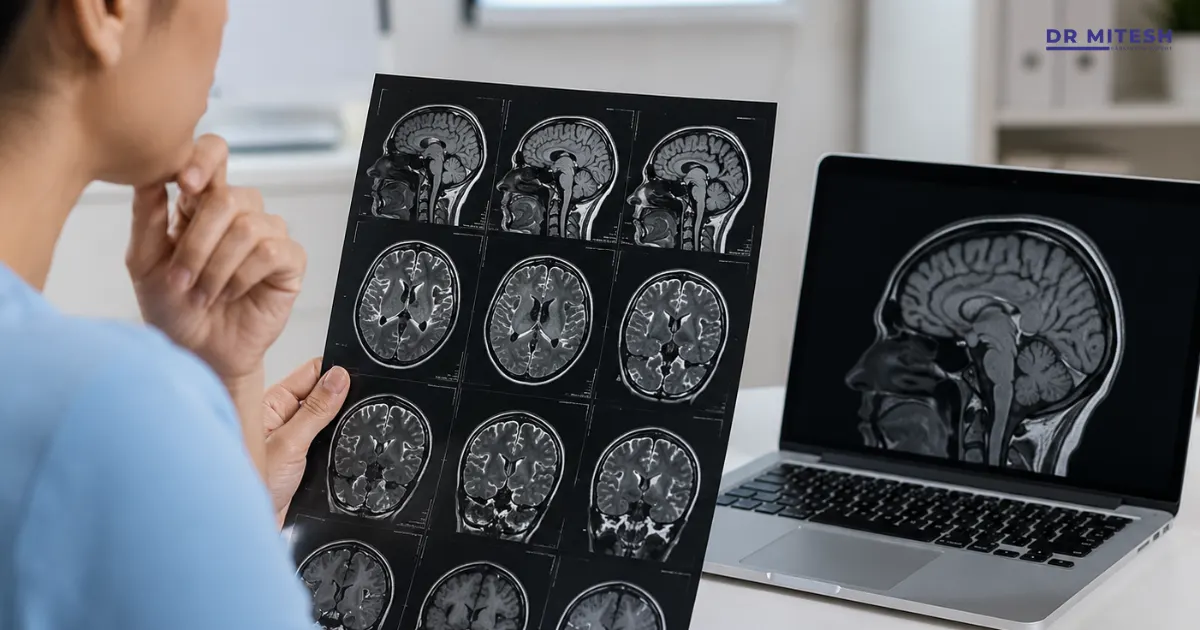
- MRI often shows white matter changes or stroke-related damage
This condition is more common in patients with high blood pressure, diabetes, or history of stroke and may not respond well to levodopa.
Managing Parkinson’s After a Stroke: Special Considerations
When a person with Parkinson’s disease suffers a stroke, their care becomes more complex. Rehabilitation and therapy need to account for both the neurodegenerative and vascular components.
Care Tips for Parkinson’s Patients Post-Stroke:
- Comprehensive physiotherapy to regain movement and balance
- Speech and occupational therapy to help with communication and daily tasks
- Review of medication regimen to avoid drug interactions
- Monitoring for depression and cognitive decline, which may worsen after stroke
- Nutritional support and hydration, especially if swallowing is impaired
- Management of stroke risk factors like blood pressure, cholesterol, and diabetes
Learn More About Does Parkinson’s Affect Eyesight?
How Are Parkinson’s and Stroke Diagnosed?
Accurate diagnosis is essential to differentiate between classic Parkinson’s disease and conditions like vascular Parkinsonism or post-stroke movement problems.
Diagnostic Approaches May Include:
- Detailed neurological examination
- MRI or CT scans to detect stroke-related damage
- Dopaminergic response tests using levodopa
- Evaluation of vascular risk factors and blood tests
- Functional assessments for gait, coordination, and memory
Treatment Options for Parkinson’s and Stroke
Both Parkinson’s disease and stroke require a multidisciplinary treatment plan. The goal is to improve mobility, prevent complications, and maintain quality of life.
1. Medications
- Levodopa + Carbidopa for Parkinson’s motor symptoms
- Antiplatelets and statins post-stroke to prevent recurrence
- Blood pressure and sugar control medications
- Use of antidepressants or mood stabilizers if needed
2. Physical Therapy
- Restores strength and flexibility after a stroke or rigidity
- Improves walking and reduces fall risk
- Tailored exercises for upper and lower limbs
3. Speech and Occupational Therapy
- Helps with communication, swallowing, and daily functioning
- Adapts environment and tools to patient needs
4. Deep Brain Stimulation (DBS)
For patients with advanced Parkinson’s and minimal stroke burden, DBS may still be considered. However, the candidacy depends on brain imaging and overall health.
Can Stroke Cause Parkinson-like Symptoms?
Yes. Stroke in areas like the basal ganglia or substantia nigra can cause Parkinsonism symptoms such as:
- Stiffness
- Slowness
- Balance problems
However, these cases are not classic Parkinson’s and may not benefit from standard Parkinson’s medications. Distinguishing between the two is vital for effective treatment.
When to Consult a Specialist
If you or your loved one is experiencing:
- Persistent slowness or stiffness post-stroke
- Gait imbalance or repeated falls
- Confusion about Parkinson’s vs. stroke diagnosis
- Lack of response to Parkinson’s medications
It’s time to consult a Movement Disorder Specialist.
Conclusion
Though Parkinson’s and stroke are different in nature, they can sometimes overlap in symptoms and progression, especially in elderly patients. A timely diagnosis, correct classification (e.g., classic Parkinson’s vs. vascular Parkinsonism), and comprehensive treatment approach are key to managing these neurological conditions effectively.
Whether it’s managing tremors, post-stroke weakness, or gait problems, expert neurological care makes all the difference.
For those navigating Parkinson’s or stroke-related challenges, consulting the Best Parkinson’s Doctor can make a significant difference. Expert guidance ensures personalized treatment plans, effective rehabilitation, and compassionate support to help patients regain mobility, independence, and quality of life.
Authoritative References:
- Mayo Clinic – Stroke
- Cleveland Clinic – Vascular Parkinsonism
- National Library of Medicine – Parkinson’s Disease and Stroke