Parkinson’s disease is most often associated with symptoms like tremors, rigidity, and slowness of movement. But did you know that vision changes can also be a part of this condition? Many patients and caregivers ask, “Does Parkinson’s affect eyesight?” The answer is yes, it can.
While Parkinson’s is a movement disorder, it impacts multiple parts of the nervous system, including the ocular motor system and the brain regions involved in vision processing. Understanding the link between Parkinson’s and visual symptoms can help patients seek appropriate care and improve their quality of life.
In this blog, we’ll explore how Parkinson’s disease can affect vision, the common eye-related symptoms, how they are diagnosed, and available treatments to manage them.
Understanding the Neurology Behind Parkinson’s and Eyesight
Parkinson’s disease primarily results from the loss of dopamine-producing neurons in the brain, especially in an area called the substantia nigra. Dopamine is not only important for movement but also plays a role in visual signal processing.
Key Neurological Effects on Vision:
- Disrupted dopamine affects retinal cells responsible for visual clarity and contrast sensitivity.
- Eye movement coordination is controlled by brain circuits that are often impacted in Parkinson’s.
- Autonomic nervous system changes can affect blinking, tear production, and eye pressure.
Related read: Role of Neurotransmitters in Parkinson’s Disease
Takeaway: The visual symptoms in Parkinson’s are neurologically rooted, not purely ocular, and require a neurologist’s insight for proper management.
Learn More About Managing Early Signs of Parkinson’s in Women: Hormonal Influences & Challenges.
Common Visual Symptoms in Parkinson’s Disease
If you’ve been wondering “Does Parkinson’s affect eyesight?”, here are some of the most reported visual symptoms among Parkinson’s patients:
1. Blurred Vision
- Occurs due to reduced blinking (leading to dry eyes)
- Can be a side effect of Parkinson’s medications
- May worsen during “off” periods when medications wear off
2. Double Vision (Diplopia)
- Usually seen when reading or looking in specific directions
- Caused by impaired coordination between eye muscles
- May require temporary prism glasses or eye patching
3. Difficulty with Eye Movement
- Slower saccades (quick eye movements between objects)
- Problems with convergence (looking at near objects)
- May cause trouble reading, tracking, or focusing
4. Dry Eyes
- Parkinson’s affects the autonomic nervous system
- Reduced tear production or blinking leads to discomfort and redness
- May increase risk of eye infections or corneal damage
5. Light Sensitivity (Photophobia)
- Dopamine deficiency affects how pupils adjust to light
- Patients may experience discomfort in bright environments
6. Visual Hallucinations
- Common in advanced stages or in patients on long-term Levodopa
- Usually mild and fleeting (e.g., seeing shadows or people)
- Need to rule out other neurological or psychiatric causes
7. Poor Contrast Sensitivity and Depth Perception
- Makes it difficult to distinguish objects against similar backgrounds
- Increases fall risk, especially on stairs or uneven surfaces
Takeaway: Not everyone experiences all symptoms, but even minor vision changes in Parkinson’s should be evaluated early.
Learn More About What causes Muscle Rigidity in Parkinson’s and How is it Treated?
Does Parkinson’s Medication Affect Vision?
Yes, certain medications used in the treatment of Parkinson’s may contribute to visual issues. These effects are often dose-dependent and may vary from person to person.
Common Medication-Related Vision Changes:
- Blurred vision from anticholinergic medications (e.g., trihexyphenidyl)
- Visual hallucinations from dopamine agonists or high-dose Levodopa
- Dryness and irritation due to decreased blinking with dopaminergic drugs
What to Do:
- Never stop medication abruptly without consulting your neurologist.
- Adjusting the dose or switching drugs can often reduce visual side effects.
Takeaway: Medication-induced vision issues are often reversible with proper medical guidance.
Learn More About Exercise for Parkinson’s Patients.
Eye Conditions That May Be Mistaken for Parkinson’s Symptoms
Sometimes, age-related eye disorders may overlap with symptoms seen in Parkinson’s, making diagnosis challenging.
Look Out For:
- Cataracts (cloudy vision)
- Glaucoma (peripheral vision loss)
- Macular degeneration (central vision impairment)
- Diabetic retinopathy (in diabetic patients)
It’s important to differentiate whether the visual issue is neurological or ophthalmic.
Related: Chronic Headaches or Migraines? When to Consult a Neurologist
Takeaway: A combined approach from a neurologist and ophthalmologist is ideal for accurate diagnosis and care.
Learn More About Essential Tremor vs Parkinson’s Disease: Key Differences.
Diagnosis: How Are Vision Issues in Parkinson’s Evaluated?
If you’re noticing vision problems, don’t wait. Early assessment ensures better outcomes.
Evaluation Methods May Include:
- Visual acuity test (checking sharpness of vision)
- Eye movement test (checking for sluggishness or misalignment)
- Slit-lamp exam (to assess eye surface and dryness)
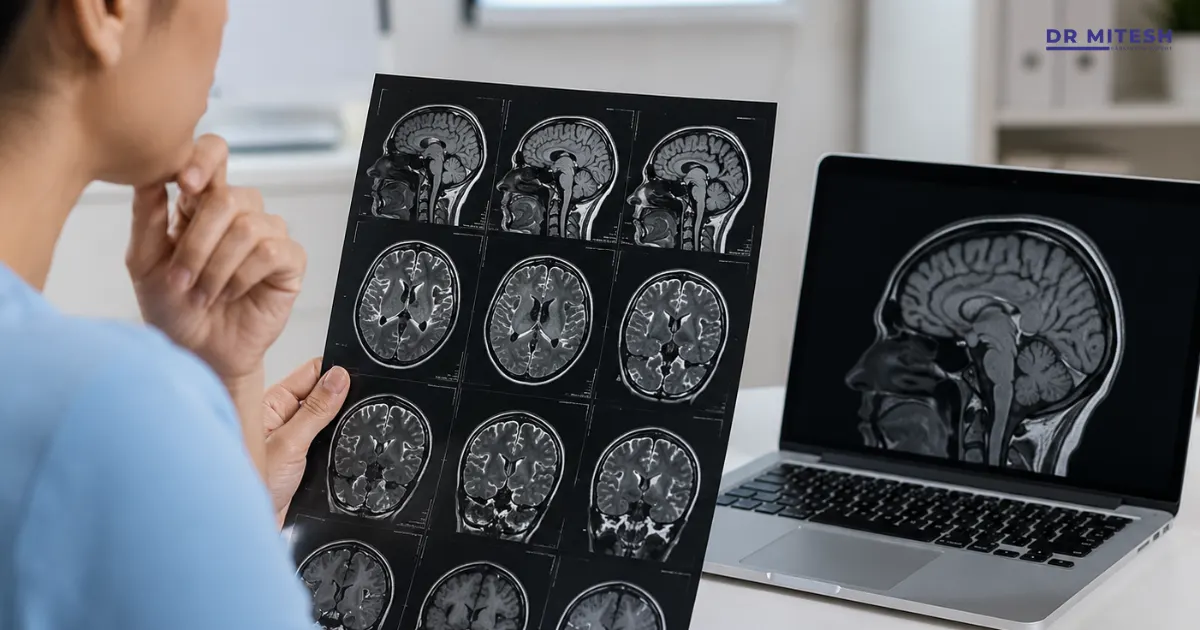
- Retinal imaging (to check contrast sensitivity and retinal dopamine activity)
- Neurological assessment (to evaluate if visual symptoms match Parkinsonian changes)
Takeaway: Collaborative care involving a neurologist, optometrist, and sometimes an ophthalmologist gives the best diagnostic clarity.
Learn More About Parkinson’s and Gut Health: The Connection and Its Impact.
Managing Vision Problems in Parkinson’s
The good news is, many visual symptoms can be improved with the right treatment. While Parkinson’s can’t be cured, its eye-related complications are manageable.
1. Artificial Tears and Eye Lubricants
- Reduce dry eyes and irritation
- Available over the counter or via prescription
2. Corrective Lenses or Prism Glasses
- Address double vision and poor convergence
- Some patients benefit from bifocal or progressive lenses
3. Blinking Exercises and Eye Movement Training
- Help keep the eyes moist and coordinated
- Guided by physiotherapists or vision therapists
4. Medication Adjustment
- Reduce dose or change medications if hallucinations or blurriness occur
5. Proper Lighting and Contrast Enhancements
- Use night lights, contrast-colored steps, or motion sensor lights
- Helps navigate safely, especially in dim environments
6. Regular Eye Exams
- Every 6-12 months to monitor changes
- Necessary to adjust glasses, medications, or detect new issues early
Read more: Occupational Therapy for Neurological Patients: What to Expect
Takeaway: Vision care should be a regular part of Parkinson’s treatment, not an afterthought.
Learn More About Is Parkinson’s Genetic? Genetics Behind Parkinson’s Disease.
FAQs: Parkinson’s and Eyesight
1. How does Parkinson’s disease affect your eyesight?
Parkinson’s can cause blurred vision, double vision, dry eyes, reduced blinking, and difficulty with eye movement due to dopamine-related changes in the brain.
2. What are the signs that Parkinson’s is getting worse?
Common signs include increased tremors, stiffness, slowness of movement, balance issues, speech difficulties, mood changes, and cognitive decline.
3. Can an eye doctor tell if you have Parkinson’s?
An eye doctor may notice signs like reduced blinking or abnormal eye movements, but a neurologist is needed for a confirmed diagnosis.
4. How long does it take to go from stage 1 to stage 4 Parkinson’s?
It typically takes 5 to 10 years, but progression varies based on age, genetics, lifestyle, and treatment response.
When to Seek Medical Help
If you or your loved one with Parkinson’s is experiencing:
- Unexplained blurriness or double vision
- Eye pain, irritation, or redness
- Sudden hallucinations or confusion
- Trouble reading, walking, or seeing in dim light
…it’s time to consult a Neurologist and eye care specialist.
Conclusion: Yes, Parkinson’s Can Affect Eyesight But You Can Take Control
To answer the core question Does Parkinson’s affect eyesight? Absolutely. But being aware of the symptoms, understanding the neurological link, and getting timely care can make a significant difference in daily comfort and safety.
If you’re managing Parkinson’s, don’t ignore subtle changes in vision. A comprehensive treatment plan that includes vision care is essential for long-term wellness.
Authoritative References
- National Library of Medicine – Ocular Motor System
- Parkinson’s Foundation – Does Parkinson’s affect Eyesight
- American Parkinson’s Disease Association – Does Parkinson’s affect Eyesight
- Parkinson’s Foundation – Parkinson’s Vision Changes
- National Library of Medicine – Blurry Vision