
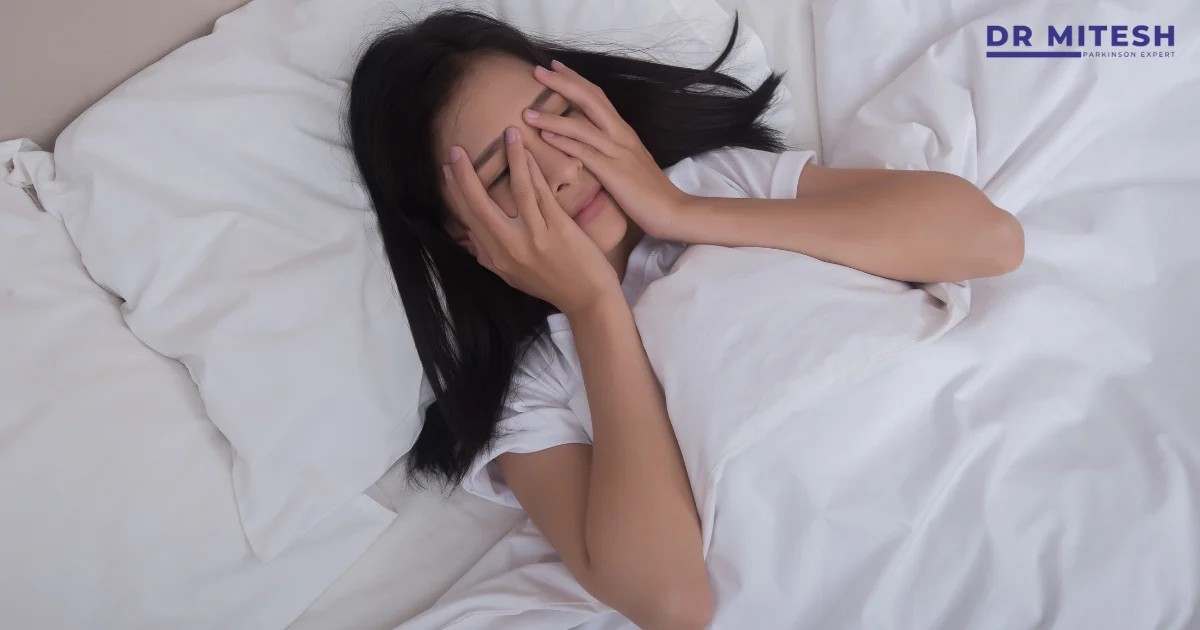
REM Sleep Behavior Disorder (RBD) can be frightening not only for the person experiencing it, but also for family members. Sudden movements, shouting, punching, or acting out dreams at night raise many questions. One of the most common concerns patients ask is:
“Will the medicines for RBD make me dependent or habit-forming?”
This fear often stops people from starting treatment or causes them to discontinue medicines early. In this blog, we clearly explain RBD Symptoms, how they are treated, whether melatonin or other medicines cause dependence, and how doctors ensure long-term safety.
What Are RBD Symptoms and Why Do They Need Treatment?
RBD occurs when the brain fails to block muscle movement during REM sleep (the dreaming stage). As a result, people physically act out dreams.
Common RBD symptoms
- Shouting or screaming during sleep
- Punching, kicking, or flailing arms
- Falling out of bed
- Talking loudly or arguing in sleep
- Acting out dreams of fighting or running
- Injuries to self or bed partner
- Little or no memory of the event
Why treatment is important
- Prevents injuries
- Improves sleep quality
- Reduces stress for caregivers
- Allows monitoring for neurological conditions
- Improves overall quality of life
Untreated RBD can become more intense over time.
Learn More About Shouting or Moving in Sleep: Does It Mean You’ll Get Parkinson’s?
Do All RBD Patients Need Medicines?
Not always.
Treatment depends on:
- Severity of symptoms
- Risk of injury
- Frequency of episodes
- Age and other medical conditions
- Presence of neurological disorders
Mild RBD
- Occasional movements
- No injuries
- Managed with safety measures alone
Moderate to severe RBD
- Frequent episodes
- Violent movements
- Injuries
- Usually needs medication support
Medicines Used for Managing RBD Symptoms
Doctors use a step-wise and cautious approach. The goal is safety not sedation.
Common RBD treatment medications
- Melatonin
- Low-dose clonazepam
- Occasionally other sleep-modulating medicines
- Treatment of underlying neurological conditions
Importantly, doses used for RBD are much lower than those used for anxiety or insomnia.
Learn More About Acting Out Dreams at Night? It’s RBD, Not a Mental Illness
Melatonin for RBD: How It Works
Melatonin is a hormone naturally produced by the brain to regulate sleep-wake cycles.
Why doctors prefer melatonin for RBD
- Mimics a natural sleep hormone
- Helps regulate REM sleep
- Reduces dream enactment
- Improves sleep structure
- Safe for long-term use
Benefits of melatonin for RBD
- Non-addictive
- Does not suppress breathing
- Safe in elderly patients
- Minimal side effects
- Can be used for years under supervision
Common patient concern
Is melatonin habit-forming?
No. Melatonin is NOT habit-forming.
It does not create dependence or withdrawal.
Learn More About Kicking or Punching in Sleep: Is It RBD and Is It Dangerous?
Are Sleep Medicines Habit-Forming in RBD Treatment?
This is one of the biggest myths.
Important clarification
Medicines used for RBD are not the same as common sleeping pills taken for insomnia.
Understanding the difference
| Aspect | RBD Medicines | Typical Sleeping Pills |
|---|---|---|
| Purpose | Control REM movements | Induce sleep |
| Dosage | Very low | Often higher |
| Dependence risk | Low under supervision | Higher if misused |
| Duration | Long-term possible | Short-term advised |
| Monitoring | Regular neurological follow-up | Often self-managed |
When taken exactly as prescribed, RBD medicines are safe.
Learn More About Leg Cramps and Restlessness: How to Tell RLS from Parkinson’s
Clonazepam in RBD: Is It Addictive?
Clonazepam is sometimes used in very low doses for RBD.
Why clonazepam is used
- Reduces muscle movements
- Suppresses dream enactment
- Highly effective for violent RBD
Is it habit-forming?
- At high doses or misuse → Yes
- At very low RBD doses under medical supervision → No
Doctors carefully:
- Start with the lowest dose
- Monitor response
- Avoid dose escalation
- Review regularly
Many patients remain stable for years without dependence.
RBD Medication Safety: How Doctors Prevent Dependence
Neurologists follow strict safety principles.
Safety steps used
- Lowest effective dose
- No dose escalation without need
- Regular follow-up
- Avoid combining sedatives
- Review every 3-6 months
- Adjust medicines with age
Patients are never advised to:
- Increase dose on their own
- Stop suddenly without guidance
- Combine with alcohol
Lifestyle Measures That Reduce Medicine Need
Medicines work best when combined with lifestyle changes.
Helpful daily habits
- Fixed sleep and wake time
- Avoid alcohol at night
- Reduce screen exposure before bed
- Manage stress
- Avoid sleep deprivation
Bedroom safety measures
- Remove sharp objects
- Place mattress low
- Pad bedside furniture
- Use bed rails if needed
These steps often allow lower medicine doses.
Learn More About RLS in Arms and Hands Possible? Understanding the Rare Cases
Managing RBD Symptoms Safely
| Strategy | Why It Helps |
|---|---|
| Melatonin | Regulates REM sleep naturally |
| Low-dose medication | Controls movements safely |
| Bedroom safety | Prevents injuries |
| Regular follow-up | Avoids long-term side effects |
| Lifestyle changes | Reduces episode frequency |
Does Everyone Need RBD Medicines for Life?
No.
Some patients:
- Improve over time
- Require reduced doses
- May stop medicines under guidance
Others:
- Need long-term treatment
- Especially if symptoms are severe
Treatment is individualized, not one-size-fits-all.
RBD, Parkinson’s, and Long-Term Monitoring
RBD can sometimes appear years before Parkinson’s disease or related conditions.
What this means
- Not everyone with RBD will develop Parkinson’s
- Medicines do not increase this risk
- Regular neurological check-ups are important
Early monitoring allows:
- Timely diagnosis
- Better long-term outcomes
- Proper symptom management
When Should You Worry About Medicine Dependence?
Seek medical advice if:
- You feel excessively sleepy during the day
- You feel the urge to increase dose yourself
- You miss doses and feel unwell
- Alcohol is being used with medicines
- Another doctor adds sleep pills
These situations are preventable with guidance.
Frequently Asked Questions (FAQs)
1. Is melatonin safe for long-term use in RBD?
Yes. Under medical supervision, melatonin is safe and non-addictive.
2. Are RBD medicines like sleeping pills?
No. They target REM sleep behavior, not just sleep induction.
3. Can I stop RBD medicines suddenly?
No. Always consult your doctor before stopping.
4. Will RBD medicines damage my brain?
No. When used correctly, they protect sleep and safety.
5. Can lifestyle changes replace medicines completely?
In mild cases, yes. In severe cases, medicines are still needed.
Conclusion
Managing RBD Symptoms safely requires clarity, not fear. Medicines like melatonin and carefully prescribed treatments are not habit-forming when used under expert supervision. The goal is to protect sleep, prevent injuries, and maintain quality of life not to create dependence.
With proper diagnosis, the right medication plan, lifestyle adjustments, and regular monitoring, most patients live safely and confidently with RBD. For accurate diagnosis and personalized treatment planning, consulting Movement Disorder Specialist in Ahmedabad ensures both safety and long-term peace of mind.
Authoritative References
- Mayo Clinic – RBD Symptoms
- Cleveland Clinic – RBD Symptoms
- American Brain Foundation – RBD Symptoms