
Many people assume that slipping or stumbling occasionally is just part of getting older. But when someone is frequently falling, it often signals something deeper, and might even reflect changes in the brain’s health. In this blog, we’ll explore:
- Why repeated falls are more than “just clumsiness”
- How balance problems and brain health are connected
- Common neurological causes of frequent falls
- What to ask when you’re wondering why do I keep losing balance
- How falls relate to nerve and brain disorders
- What steps you can take to investigate and reduce risk
Introduction
Falling once might be bad luck. But frequent falling that is, multiple falls over weeks or months, suggests an underlying issue. It could be due to inner-ear problems, muscle weakness, medication side effects, or importantly, neurological changes. Because balance depends on coordination between sensory input, nerve signals, and muscle responses, regular falls may indicate trouble somewhere in that chain.
In older people, falls are one of the leading causes of injury and disability. But in many cases, the fall is not the root problem, it’s a symptom. Recognizing the link between balance problems and brain health is the first step in diagnosing and managing these episodes.
Why Frequent Falling Is More than Just a Slip
Before diving into causes, it helps to understand what frequent falls tend to do:
- Injuries: fractures (hip, wrist), bruises, head trauma
- Loss of confidence, fear of falling leads to reduced activity
- Isolation, reduced mobility, decline of strength
- Potential to worsen brain health (head impacts, slower recovery)
- A clue that something is malfunctioning in nerves, muscles, or brain circuits
A review showed that among people with neurological diseases (such as Parkinson’s, stroke, or neuropathy), falls are twice as common as in healthy age-matched groups. In neurological outpatients, as many as one in three had a fall in a year.
So frequent falling often means that the systems maintaining balance are stressed or failing, a warning sign worth investigating.
Learn More About Supplements for Brain Function: What Helps and What Doesn’t.
How Balance and Brain Health Are Linked
Balance is not a single sense. It’s a complex integration of:
- Vestibular system (inner ear, semicircular canals)
- Visual input (eyes, spatial mapping)
- Somatosensory / proprioception (feedback from muscles, joints)
- Motor response (muscles, reflexes)
- Central processing (brainstem, cerebellum, cortex)
When any of these get disrupted, balance suffers. Over time, repeated falls may reflect worsening function in the brain or nervous system.
Cognitive Decline and Falls
Research suggests cognitive decline (especially in attention, executive function, reaction speed) contributes to falls. When the brain slows in processing or decision-making, it may fail to issue timely corrections.
Some studies show that the more frequent falls one has, the higher risk of slower cognition later, evidence of a bidirectional relationship: poor brain health leads to falls, and falls (especially head injuries) may worsen brain health.
Neurological Disorders Raise Fall Risk
Many brain conditions impair the pathways that control balance:
- Parkinson’s, multiple sclerosis, cerebellar disorders
- Peripheral neuropathy (nerves from feet/legs don’t warn the brain when foot placement is wrong)
- Stroke, brain tumors, or structural lesions affecting balance circuits
- Autonomic dysfunction (blood pressure drops on standing)
A study of older adults with neurological diseases found that 46% experienced a fall in one year, compared to only 16% in a control group.
Thus, frequent falling may be a window into deeper neurological issues.
Learn More About Anti-inflammatory Diets and Their Role in Neurological Health.
Common Neurological Causes of Frequent Falls
If you’re asking why do I keep losing balance, it helps to know which brain or nerve problems often underlie recurring falls.
1. Parkinson’s Disease and Other Parkinsonisms
- Characterized by slowness (bradykinesia), stiffness, postural instability
- Falls often occur later in the disease course
- Those with more severe balance problems have higher fall rates (60-80% of Parkinson’s patients fall)
2. Cerebellar Disorders & Ataxia
- The cerebellum coordinates fine motor control, rhythm, and balance
- Dysfunction here causes unsteady gait, wide-based walking, poor coordination (ataxia)
- Falls in these conditions are often side-to-side and unpredictable
3. Neuropathy (Peripheral Nerve Disorders)
- Damage to nerves in legs or feet impairs sensation, so the brain doesn’t “feel” misplacement
- Ankle proprioception loss causes missteps and falls
4. Vestibular Disorders
- Inner-ear problems (e.g. Meniere’s disease, vestibular neuritis) disrupt spatial equilibrium
- Dizziness, vertigo often accompany falls
5. Stroke, Brain Injury, or Structural Lesions
- Damage to brain areas responsible for balance, coordination, or movement control
- Gait asymmetry or weakness increases fall risk
6. Autonomic (Blood Pressure) or Cardiovascular Causes
- Orthostatic hypotension (drop in blood pressure when standing) can produce dizziness and sudden falls
- Heart arrhythmias or syncope may cause sudden collapse
7. Medication Effects & Multi-Factorial Risk
- Some medications (antidepressants, antipsychotics, sedatives) increase fall risk in neurological patients.
- Visual problems, musculoskeletal weakness, joint issues may compound neurological risks
Because falls in neurological diseases are often multifactorial, a broad approach is needed in evaluation.
Learn More About Drug-Induced Movement Disorders: Causes and Treatments.
What to Do If You or Someone Is Frequently Falling
Frequent falling is not inevitable. Here’s a step-by-step guide you can follow (or bring to your Neurologist):
Step 1: Document & Track
- Keep a fall diary when, where, what was happening, what preceded the fall
- Note any dizziness, vision changes, numbness, weakness
- Record medications and changes
Step 2: Medical Evaluation
A clinician (neurologist, movement disorder specialist) will likely:
- Do a neurological exam (gait, balance tests, muscle strength, reflexes)
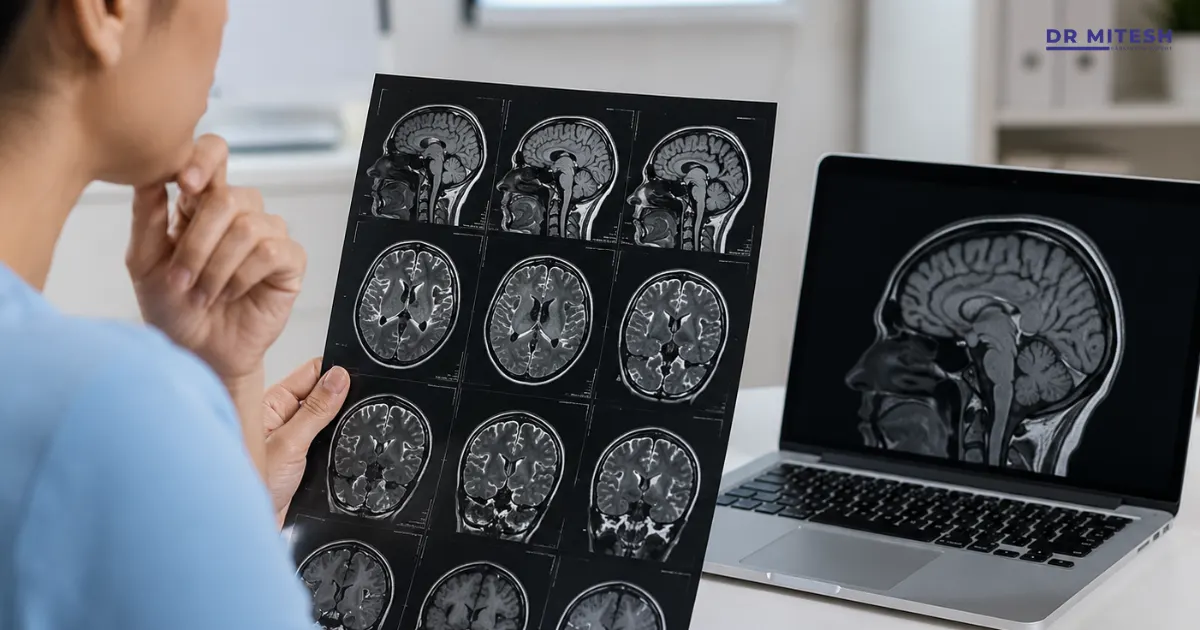
- Order imaging (MRI brain, spine)
- Vestibular testing (balance lab)
- Nerve conduction studies if neuropathy suspected
- Autonomic testing (blood pressure response, heart rate)
- Review medications and comorbidities
Step 3: Risk Reduction & Rehabilitation
- Physical therapy / balance training exercises that challenge balance in a safe way
- Strength training for legs and core
- Gait training, training to avoid missteps
- Assistive devices (cane, walker) when needed
- Home safety modifications (non-slip floors, grab bars)
- Vision correction, proper lighting
- Medication review & adjust side effects
Step 4: Monitoring Brain Health
- Because falls and brain health are linked, monitor cognitive function (memory, attention)
- If imaging shows white matter changes or brain lesions, follow neurologist advice
Step 5: Prevent Head Injuries
- Always treat any head trauma from a fall seriously
- Use helmets or head protection in risky situations
- Early evaluation of traumatic brain injury signs (confusion, headache, memory change)
Learn More About Foods That Improve Brain Health.
Frequently Asked Questions
Q: At what point is “falling often” concerning?
A: Two or more unplanned falls in six months is a red flag. Even one fall in someone who never fell before warrants evaluation.
Q: Can “just aging” explain frequent falls?
A: Aging contributes (weaker muscles, slower reflexes), but consistent falling suggests additional factors beyond normal aging.
Q: Are there “warning signs” before a fall?
A: Yes, unsteadiness, needing to hold onto walls, feeling dizziness, stepping wide or variably, loss of confidence in walking.
Q: Does every fall mean a brain problem?
A: No, some are due to environmental hazards or muscle weakness. But repeated falls should prompt a neurological review.
Q: Can treatments reverse balance decline?
A: In some cases (vestibular rehabilitation, physical therapy, medication correction), yes there can be improvement. If a brain disease is present, therapy may slow progression.
Conclusion
Frequent falling is a signal, not to be ignored. It often reflects breakdowns in balance systems, nerves, or brain circuits. Because balance problems and brain health are deeply connected, repeated falls should lead us to look deeper, not just chalk them up to chance.
By understanding neurological causes of frequent falls, asking why do I keep losing balance, and getting early evaluation, you unlock the opportunity for prevention, rehabilitation, and safer mobility. If you’re experiencing falls, remember: you don’t have to accept it as “just aging” help is available.
Authoritative References
- National Library of Medicine – Frequent Falling
- Mayo Clinic – Balance Problem
- Cleveland Clinic – Balance Problem
- Mayo Clinic – Drop in Blood Pressure
- Johns Hopkins – Balance Problem and Brain Health
- Healthline – Fainting