Medically reviewed by Dr. Mitesh Chandarana | Last updated: August 2026
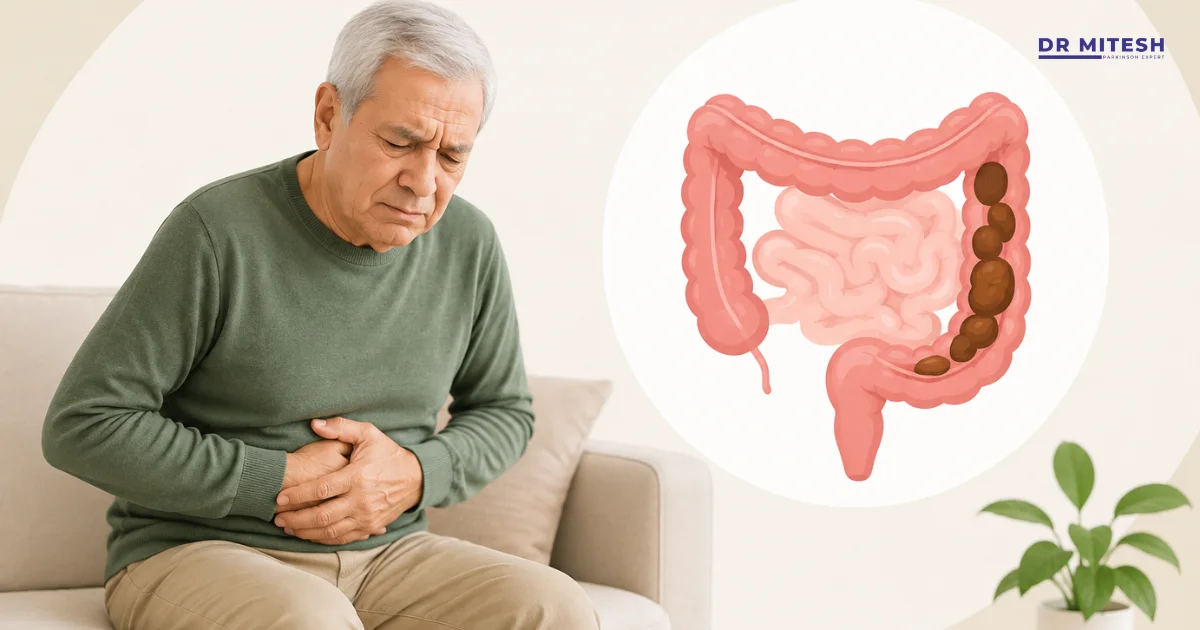
Constipation is one of the most common symptoms I discuss with Parkinson’s patients and one of the most surprising for many of them to hear is directly connected to the disease itself, rather than just a side effect of getting older or a medication issue to work around separately. In fact, constipation is now recognized as one of the earliest signs of Parkinson’s disease, often appearing years, sometimes decades, before any tremor or movement symptom develops.
This guide explains why constipation happens in Parkinson’s, what makes it different from ordinary constipation, and practical approaches that actually help.
Why Constipation Happens in Parkinson’s
Parkinson’s disease is best known for affecting brain regions that control movement, but the same underlying process, the buildup of a protein called alpha-synuclein also affects the enteric nervous system, the extensive network of nerves lining the gut that’s sometimes called the body’s “second brain.”
Research suggests this gut-level involvement may begin remarkably early some researchers believe alpha-synuclein changes may start in the gut itself, years before spreading to the brain, which is part of why constipation so often precedes the classic motor symptoms of Parkinson’s.
In my practice, when a patient mentions a long history of constipation predating their diagnosis by many years, it’s a detail I take seriously as part of the broader clinical picture it’s a genuine, well-recognized piece of the Parkinson’s story, not an unrelated coincidence.
Why Parkinson’s Constipation Is Different
Constipation in Parkinson’s tends to involve more than just infrequent bowel movements. Contributing factors often include:
- Slowed gut motility – the same dopamine-related slowing that affects movement elsewhere in the body can slow the muscular contractions that move stool through the intestines
- Pelvic floor dysfunction – some patients experience difficulty coordinating the muscles needed to actually pass stool, even when it has reached the rectum, a distinct problem from slow transit alone
- Reduced physical activity – movement itself stimulates gut motility, so reduced mobility from PD’s motor symptoms can compound the problem
- Medication effects – certain Parkinson’s medications, as well as commonly used medications for other conditions, can worsen constipation
- Reduced fluid and fiber intake – sometimes linked to swallowing difficulties or reduced thirst sensation, which can also occur in PD
Why Untreated Constipation Matters Beyond Comfort
Chronic constipation in Parkinson’s isn’t just uncomfortable – it can meaningfully affect quality of life and even medication effectiveness:
- Medication absorption – levodopa is absorbed in the small intestine, and severely delayed gut transit can affect how consistently and predictably medication works, sometimes contributing to unpredictable “on-off” symptom fluctuations
- Abdominal discomfort and bloating, which can reduce appetite and overall wellbeing
- Increased risk of complications in severe, longstanding cases, including bowel obstruction in rare instances
This is part of why I encourage patients to mention bowel habits proactively at appointments, rather than viewing it as a minor or embarrassing topic separate from their “real” Parkinson’s care, it’s directly connected, and directly manageable.
Practical Approaches That Help
1. Dietary Measures
- Gradually increasing dietary fiber – fruits, vegetables, whole grains, and legumes while ensuring adequate fluid intake alongside it, since fiber without enough fluid can worsen constipation
- Adequate daily water intake, adjusted for individual health conditions like heart or kidney function
- Some patients find specific foods helpful – prunes and kiwifruit have reasonable evidence behind them specifically for constipation relief
2. Physical Activity
Regular movement even gentle walking helps stimulate gut motility. This is one of several reasons exercise is consistently recommended as part of comprehensive Parkinson’s management, beyond its motor and mood benefits.
3. Medication Review
A review of all medications, Parkinson’s-specific and otherwise can identify options that may be contributing to constipation, with adjustments made where clinically appropriate. This should always be done with your treating doctor rather than stopping any medication independently.
4. Laxatives and Targeted Treatments
When dietary and lifestyle measures aren’t sufficient, several options are used depending on the specific pattern of constipation:
- Osmotic laxatives (such as polyethylene glycol) – often a first-line option, well-tolerated for regular use
- Fiber supplements – useful for some patients, though they can occasionally worsen bloating in others
- Newer prokinetic and secretagogue medications – specifically developed for chronic constipation, sometimes used when standard measures aren’t enough
- Pelvic floor physical therapy – for patients whose constipation involves difficulty coordinating the muscles needed to pass stool, rather than slow transit alone
5. Routine and Timing
Establishing a consistent daily routine including trying to have a bowel movement at a similar time each day, often after a meal when the gut’s natural motility is highest can help retrain a more predictable pattern over time.
When to Bring This Up With Your Neurologist
Worth raising proactively if you experience:
- Fewer than three bowel movements per week
- Straining, hard stools, or a sense of incomplete emptying
- Constipation that isn’t responding to basic dietary changes
- New or worsening abdominal pain or bloating
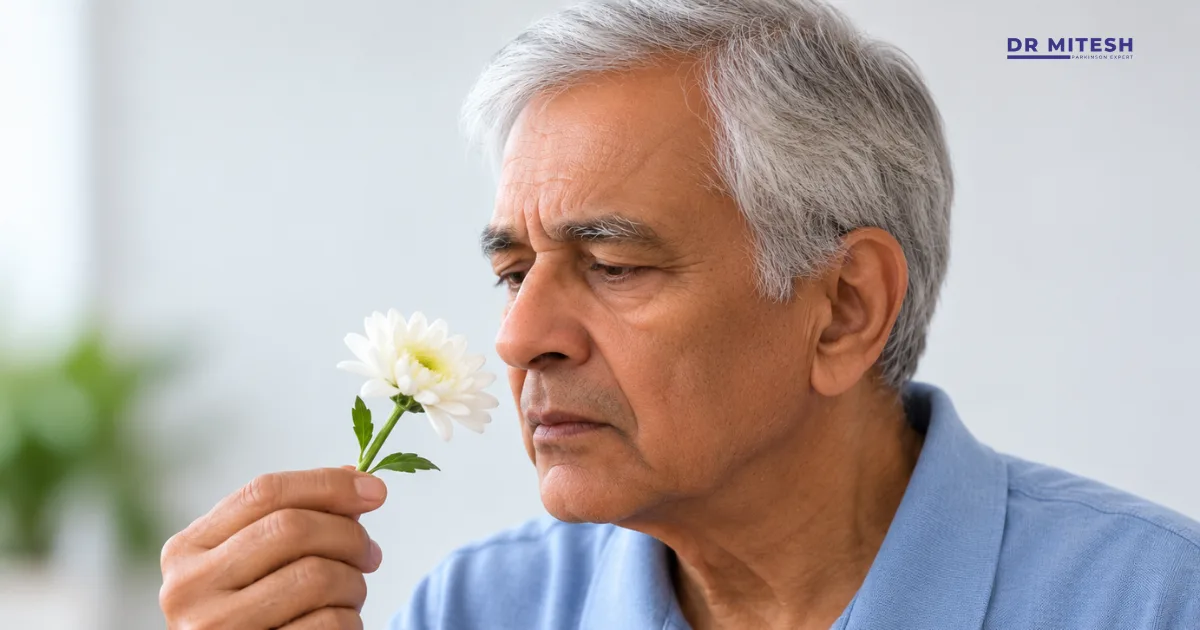
This is also relevant context if you’re being evaluated for possible Parkinson’s but haven’t yet received a diagnosis a long-standing history of constipation, especially alongside other early non-motor symptoms like REM Sleep Behavior Disorder or reduced sense of smell, is a detail worth mentioning to your neurologist rather than dismissing as unrelated.
The Bigger Picture
Constipation in Parkinson’s is common, well-recognized, and importantly genuinely manageable in the vast majority of patients with the right combination of dietary changes, physical activity, and, where needed, targeted treatment. It’s not something to simply live with as an unavoidable part of the disease.
If constipation has become a persistent issue for you or someone you’re caring for with Parkinson’s, raising it specifically at your next appointment rather than treating it as a separate, minor issue from your “main” Parkinson’s care opens the door to real, practical relief.
Struggling with constipation or other non-motor symptoms alongside Parkinson’s? These symptoms are treatable, and you don’t have to just live with them. Book a consultation with Dr. Mitesh Chandarana, recognized as one of the best movement disorder specialists in Ahmedabad, for a comprehensive evaluation of your Parkinson’s care plan.
Authoritative References
- Parkinson’s Foundation – Constipation and Parkinson’s Disease
- Michael J. Fox Foundation – Gut Feeling: Constipation and Parkinson’s
- National Institute of Diabetes and Digestive and Kidney Diseases – Constipation: Symptoms and Causes